



 Share
Share
30 Apr 2026
Energy costs remain one of the most significant operational pressures facing UK businesses.
Despite some easing from the peaks of 2022, prices remain around 35% above pre-crisis levels. And the factors driving volatility have not gone away.
The Russia-Ukraine conflict continues to disrupt European energy markets. More recently, tensions in the Middle East, including strikes on key energy infrastructure in early 2026, have added further pressure to global oil and gas supplies. For UK businesses, the result is ongoing uncertainty, elevated costs, and a market where prices can shift rapidly in response to events beyond our control.
In this environment, managing energy effectively is no longer optional. It is essential.
ISO 50001 provides a structured, internationally recognised framework for doing exactly that. It helps organisations take control of their energy use, reduce costs, and build resilience against the market volatility that shows no sign of disappearing.
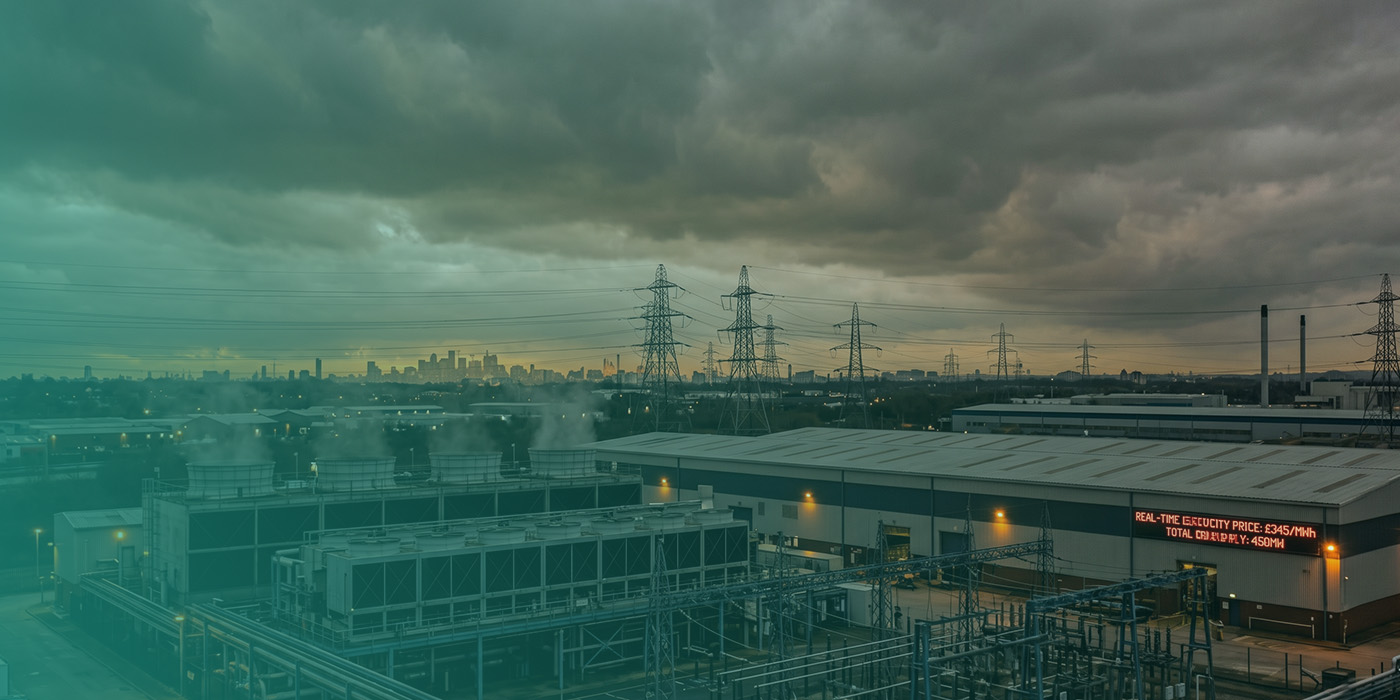
A volatile energy market made visible: real-time wholesale electricity pricing, grid infrastructure under pressure and a storm-laden horizon combine to frame the commercial property sector’s exposure to energy cost risk with striking clarity.
The Current Energy Landscape
The energy crisis that began in 2021 has evolved, but it has not ended.
Global gas shortages, supply chain disruption, and geopolitical instability have combined to create a prolonged period of elevated energy costs. While wholesale prices have fallen from their 2022 peaks, they remain significantly higher than the pre-crisis norm.
For many UK businesses, this translates directly into higher operating costs, tighter margins, and increased budget uncertainty. Add to that, business energy pricing is complex, with contract structures, network charges, and non-commodity costs all playing a significant role in the final price paid.
The situation has been compounded by events in early 2026. Military action affecting Middle Eastern energy infrastructure has created renewed concerns about global supply security. Oil prices have risen above $100 per barrel, LNG shipping routes have faced disruption, and European gas markets have tightened once again. In the shorter term, wholesale gas prices have also risen in recent weeks, reinforcing the ongoing volatility in the market.
The UK, with its high reliance on natural gas for both electricity generation and heating, remains particularly exposed to these global dynamics. Gas typically sets the marginal price of electricity, meaning that fluctuations in gas markets have a direct and immediate impact on power costs.
This exposure is amplified by the UK’s increasing dependence on imported gas and its relatively limited long-term storage capacity compared to other European countries. As a result, when international gas markets tighten or prices rise, UK businesses feel the effects quickly and often more acutely.
This combination of wholesale volatility and rising non-commodity and compliance costs means that even where headline prices stabilise, total energy spend remains under pressure.
This is not a temporary situation. Energy price volatility and complexity are now structural features of the market that organisations need to plan for and manage actively.

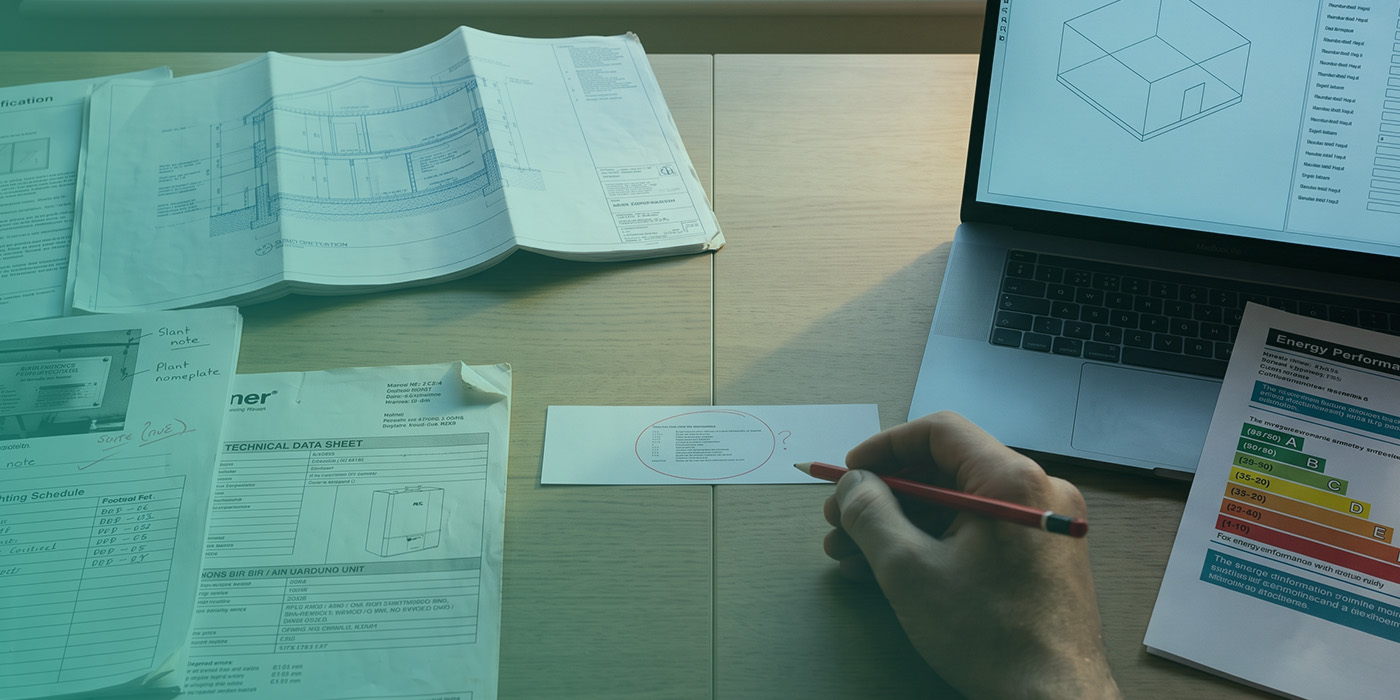
The ISO 50001 management cycle in practice: a structured programme of planning, implementation, monitoring and review that transforms energy management from a reactive cost concern into a governed, continuously improving organisational discipline.
What Is ISO 50001?
ISO 50001 is the international standard for Energy Management Systems. It provides a framework for organisations to establish, implement, maintain, and continually improve their energy performance.
The standard is based on the Plan-Do-Check-Act model used in other ISO management systems, including ISO 9001 (quality) and ISO 14001 (environmental management). This makes it straightforward to integrate with existing management systems.
Unlike many energy initiatives that focus on one-off projects or isolated improvements, ISO 50001 creates a systematic, ongoing approach to energy management. It embeds energy considerations into organisational decision-making, operations, and culture.
The standard is technology-neutral. It does not prescribe specific solutions or equipment. Instead, it focuses on processes and performance, allowing organisations to identify and implement the measures that make sense for their specific circumstances.
ISO 50001 applies to organisations of all sizes and sectors. Whether you operate a single building or a portfolio of hundreds of sites, the framework can be scaled and adapted to fit your needs.

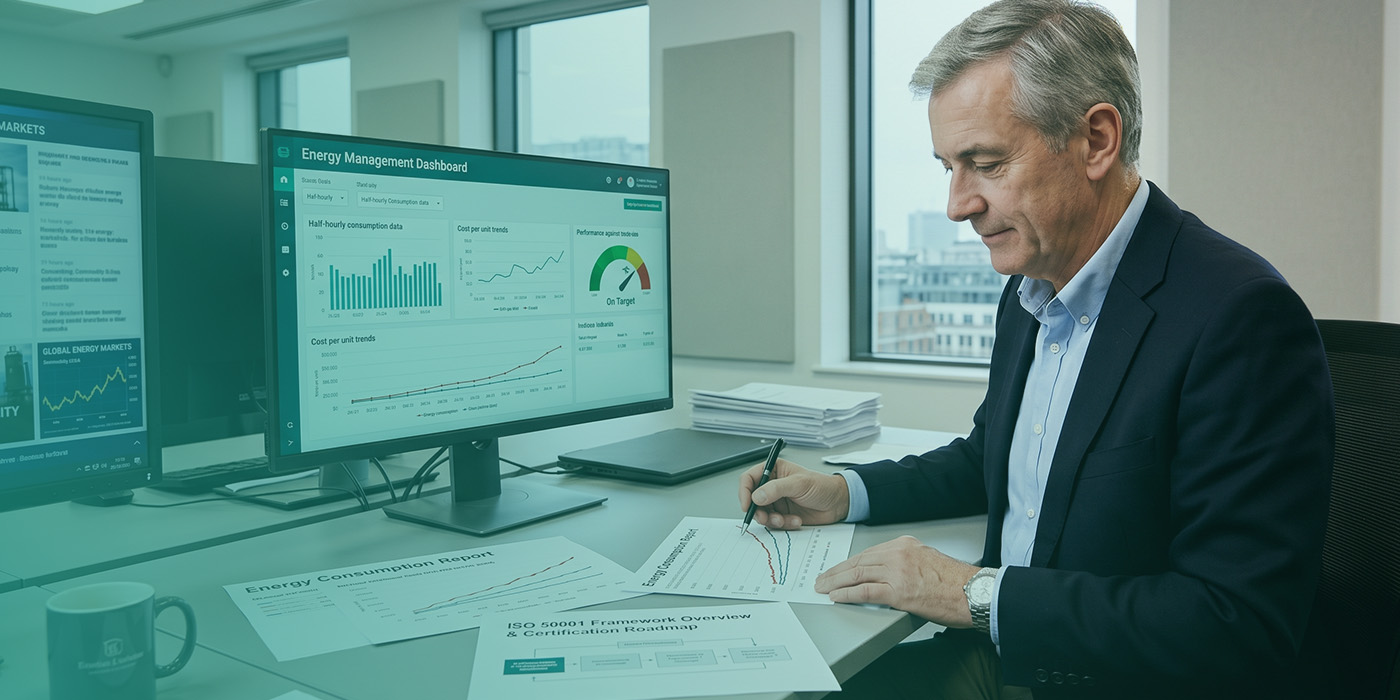
An energy advisor presenting the tangible benefits of ISO 50001 certification to a senior decision-maker, with falling consumption trends, active ESOS compliance status and measurable energy cost reductions making the financial case as clearly as the sustainability one.
The Benefits of ISO 50001
Implementing ISO 50001 delivers multiple benefits that extend well beyond simple compliance.
Cost reduction through improved efficiency. The systematic approach to energy management helps identify waste, optimise processes, and reduce consumption. Many organisations report significant cost savings within the first year of implementation, with further improvements over time as the system matures.
Protection against price volatility. While ISO 50001 cannot control external energy prices, it helps reduce exposure to them. Lower consumption means lower bills, regardless of what happens in wholesale markets. And better data and monitoring enable faster responses when conditions change.
Regulatory compliance and ESOS exemption. In the UK, organisations with a certified ISO 50001 system covering at least 90% of their total energy use can be exempt from the mandatory energy audit requirements of the Energy Savings Opportunity Scheme (ESOS). This can represent significant time and cost savings for qualifying organisations.
Support for net zero pathways. Energy efficiency is the first priority in any credible decarbonisation strategy. ISO 50001 provides the framework to systematically reduce energy demand and consumption, supporting progress toward net zero targets.
Enhanced reputation and stakeholder confidence. ISO 50001 certification demonstrates a structured, verified commitment to energy management. This can strengthen relationships with investors, customers, tenants, and other stakeholders who increasingly expect evidence of sustainability performance.
Improved operational resilience. Better understanding of energy use, stronger data, and clearer processes all contribute to more resilient operations. When disruption occurs, whether from supply issues, price spikes, or other factors, organisations with mature energy management systems are better positioned to respond.

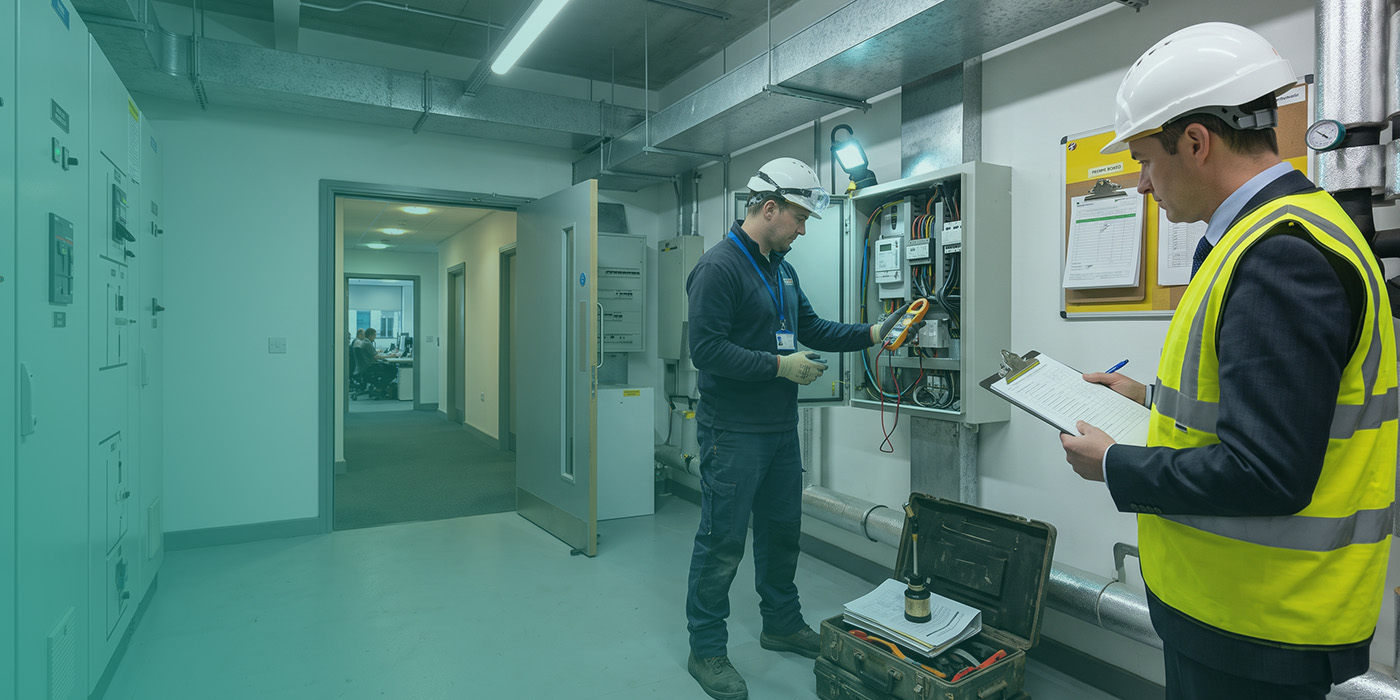
An ISO 50001 implementation team in session, working through the phased programme of energy management planning, performance reporting and continuous monitoring that certification requires and that auditors will expect to see evidenced at every stage.
What ISO 50001 Involves
Implementing ISO 50001 typically involves several key stages.
Energy review and baseline. Understanding current energy use, identifying significant energy users, and establishing a baseline against which improvements can be measured.
Setting objectives and targets. Defining what the organisation wants to achieve, based on its specific circumstances, priorities, and opportunities.
Developing action plans. Identifying the measures, projects, and operational changes that will deliver improvements, along with responsibilities and timescales.
Implementation and operational controls. Putting plans into action, embedding energy management into day-to-day operations, and ensuring staff understand their roles.
Monitoring, measurement, and analysis. Tracking performance against baseline and targets, using data to identify further opportunities and address any issues.
Management review and continual improvement. Regular review of the system’s effectiveness, with ongoing refinement and improvement over time.
Certification is optional but provides external verification that the system meets the requirements of the standard.

An Inteb consultant walking a client through their energy compliance position, with the platform’s green RAG status, initial risk assessment findings and ISO 50001 certification all in view and telling a coherent story of a well-managed, well-governed energy programme.
How Inteb Can Help
Inteb provides full support for the design, implementation, and management of ISO 50001 systems.
We begin with a detailed assessment of your current energy practices, identifying gaps and opportunities for improvement. From there, we design a tailored framework that reflects your operational needs and objectives.
During implementation, we develop the processes, documentation, controls, and performance measures required to meet ISO 50001 requirements. We guide your team through the practical steps needed to embed the system and ensure everyone understands their role.
Ongoing management is central to maintaining certification and achieving real results. We help you monitor performance indicators, update records, review risks, and prepare for audits. When combined with your wider energy management services, ISO 50001 becomes an active driver of reduced consumption and improved efficiency.
Conclusion
Energy price volatility is now a permanent feature of the market. The geopolitical factors driving instability show no sign of resolving, and UK businesses remain exposed to global dynamics beyond their control.
In this environment, taking a structured approach to energy management is not optional. It is essential for controlling costs, managing risk, and building operational resilience.
ISO 50001 provides the framework to do this effectively. It turns energy management from a reactive, ad-hoc activity into a systematic, continually improving process.
The organisations that take control of their energy use now will be better positioned to navigate whatever the market brings next.
📞 Talk to us about ISO 50001: https://weareinteb.co.uk/contact
🔗 Energy management services: https://weareinteb.co.uk/energy-management-services/
View

View

View
View

View

View

