




 Share
Share
When a commercial property sits vacant, the most visible impact is lost rental income. But this is only part of the financial picture.
The true cost of void periods extends far beyond rent. Business rates, service charge shortfalls, ongoing maintenance, and tenant incentives all continue to accumulate during vacancies.
For buildings with weaker energy performance, these costs are often amplified by longer marketing periods and reduced tenant demand.
While EPCs do not measure actual energy consumption, they provide a clear indication of the potential efficiency of a building’s fabric and installed services. For prospective tenants, this is an important signal when assessing operational cost risk and suitability.
Understanding the full cost of vacancy helps landlords and asset managers make better decisions around leasing strategy, energy investment, and portfolio performance.
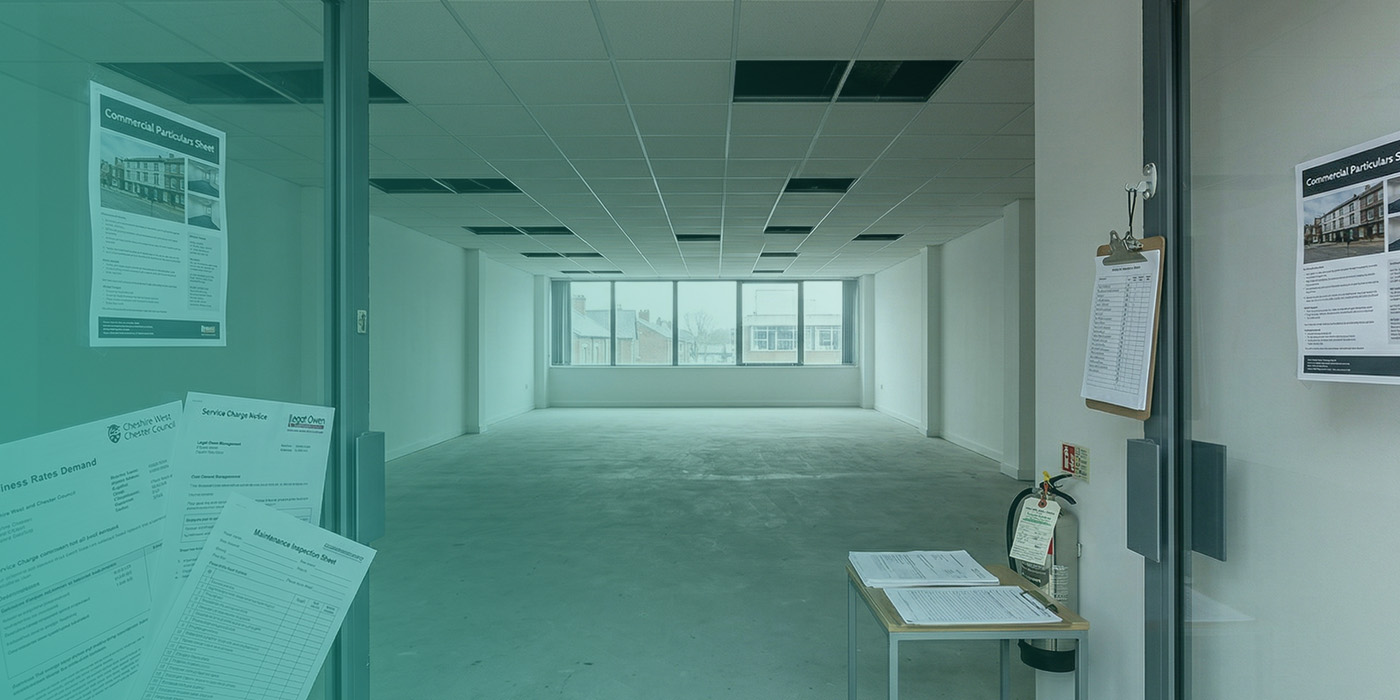
A bare, unlettable commercial floor tells its own story, with accumulating compliance documents and void costs pinned to the walls and piling up on the landlord’s desk long before a tenant is found.
How Energy Performance Affects Void Duration
Energy performance is increasingly influencing how quickly buildings can be re-let.
Tenant expectations have shifted. Occupiers are more focused on operational costs, ESG commitments, and future regulatory risk than ever before. Buildings with inefficient systems or poor fabric performance can create uncertainty around service charges, future works, and long-term occupancy costs.
As a result, buildings with weaker EPC ratings may:
Even though EPCs are not a measure of actual energy use, they act as a proxy for building quality and efficiency, influencing perception and decision-making.
This means energy performance now has a direct impact on leasing outcomes and void duration.
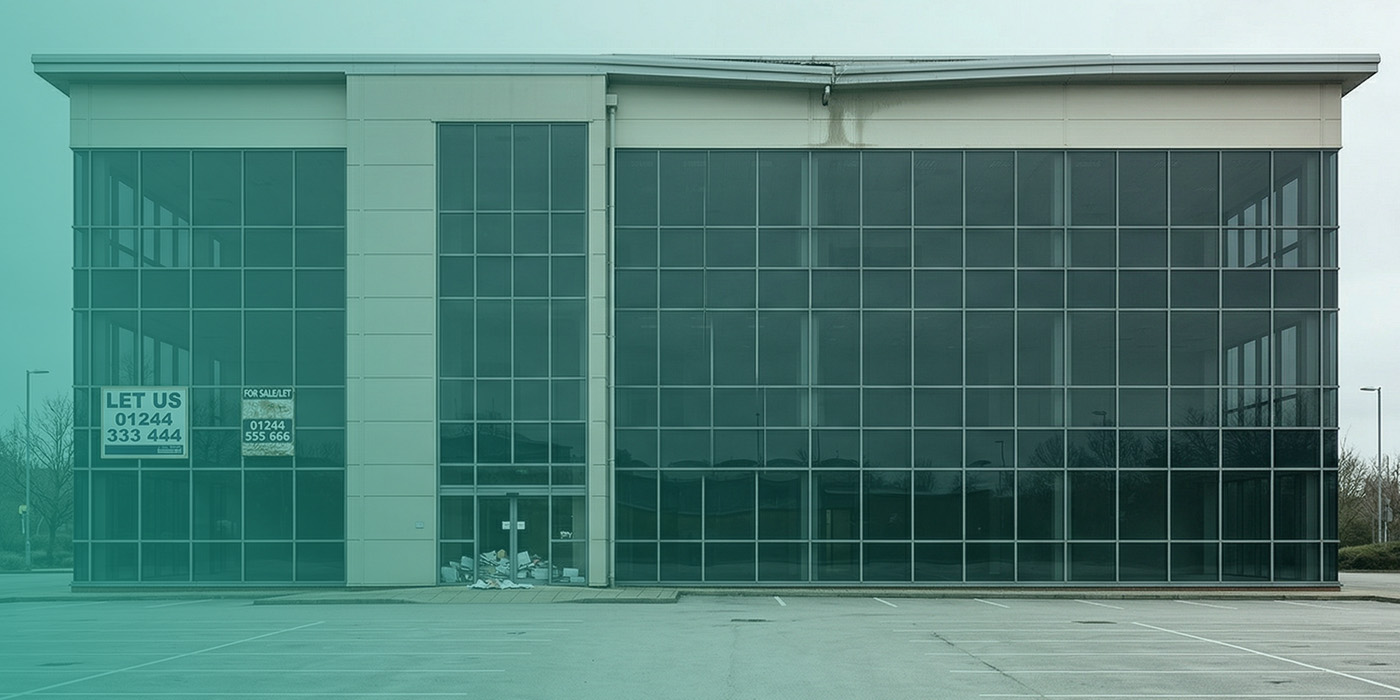
A commercial building carrying both a “Let Us” and a “For Sale/Let” board signals a landlord running out of options, as the compounding costs of vacancy begin to outweigh the case for holding the asset.
The Compounding Effect of Vacancy
Void costs do not simply accumulate. They compound.
A building that takes longer to let does not just lose rental income. It continues to incur:
At the same time, the likelihood of increased tenant incentives rises, further reducing the effective rental value achieved.
Extended voids can also introduce wider financial and strategic challenges, including:
The difference between a building that lets quickly and one that remains vacant for an extended period can therefore be significant in both income and value terms.

A landlord confronting the evidence: a poorly rated asset dragging on portfolio yield, with the EPC certificate and income analysis data making the case for an energy improvement strategy impossible to ignore.
Reducing Void Risk Through Energy Strategy
Proactive energy management can play a key role in reducing void risk.
Improving EPC ratings does not always require major capital expenditure. In many cases, targeted interventions can deliver meaningful results, including:
Aligning energy improvements with planned maintenance or refurbishment works can also improve efficiency and reduce disruption.
Most importantly, understanding EPC positions across a portfolio allows landlords to prioritise assets at risk and take action before void periods become extended and costly.
Conclusion
Void costs are often higher than anticipated, and for buildings with poor energy performance, they can be significantly amplified.
Longer marketing periods, increased incentives, and ongoing holding costs all contribute to reduced income and weaker asset performance.
Energy performance is now a key factor in leasing strategy, not just regulatory compliance.
By taking a proactive approach to EPCs and energy performance, landlords and asset managers can reduce void risk, protect income, and maintain competitive positioning in an evolving market.
📘 Get an instant EPC estimate: https://weareinteb.co.uk/epc-quote/
🔗 MEES services: https://weareinteb.co.uk/mees-epc-improvements/

View
View

View

View

View

View

