




 Share
Share
13 Feb 2026
Energy procurement in 2026 carries more contractual risk than at any point in recent memory.
For many large energy users, the biggest cost exposure is no longer market volatility. It is contract structure. Supplier agreements have evolved quickly in response to rising system costs, regulatory reform, and increased grid pressure. In doing so, much of the financial risk has quietly shifted away from suppliers and onto customers.
At Inteb, we are seeing the same pattern repeatedly across commercial property portfolios, public sector estates, and corporate occupiers. Contracts that appear competitive at headline level are exposing clients to escalating costs through clauses that are poorly understood, lightly scrutinised, or underestimated at procurement stage.
This blog sets out the most common contract traps we are seeing in 2026, why they matter more than ever, and what large energy users should be doing now to protect budgets, service charges, and long-term flexibility.
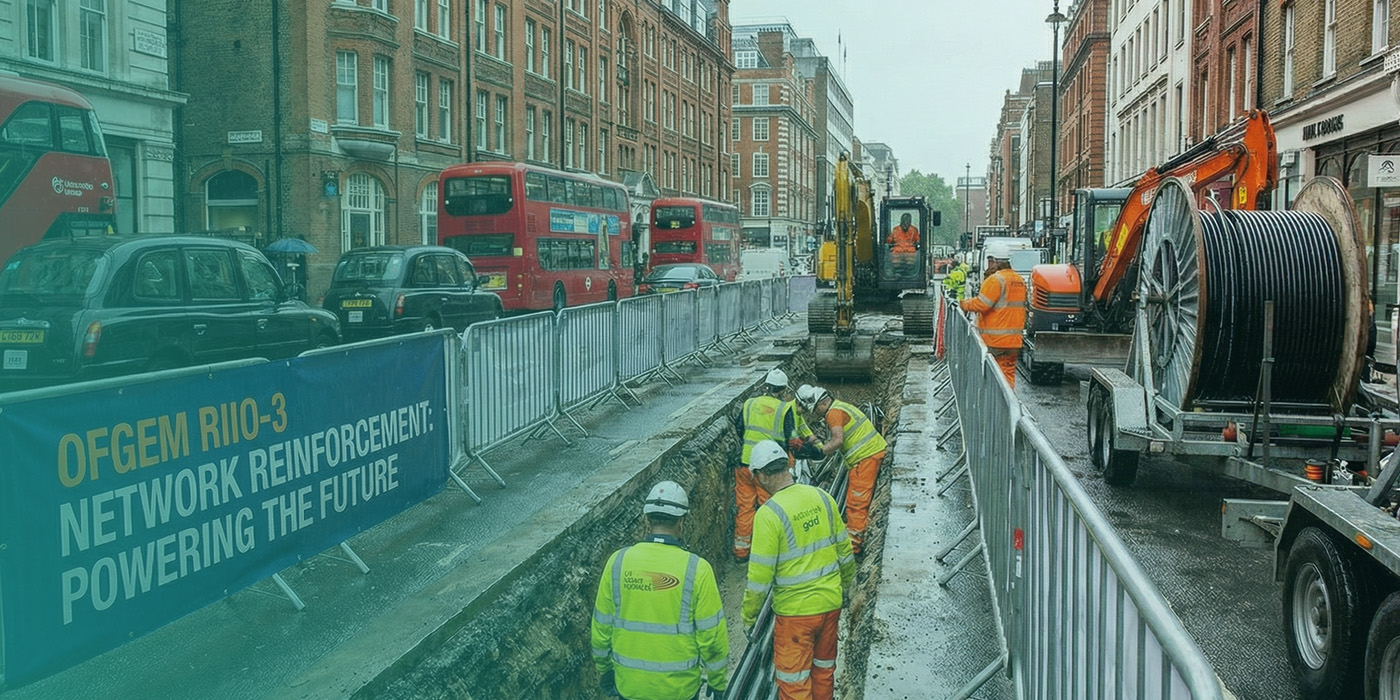
Urban roadworks under Ofgem RIIO 3 network reinforcement, highlighting energy procurement contract risks 2026 linked to infrastructure investment.
Why Supplier Contracts Changed So Much by 2026
To understand today’s contract risk, it helps to understand the pressures suppliers are under.
Electricity system costs have increased structurally. Network reinforcement under RIIO-3, growing balancing requirements, capacity constraints, and the introduction of new levies such as the Nuclear RAB mean suppliers are facing higher and more uncertain non-commodity exposure.
Rather than absorbing this risk, many suppliers have rewritten contracts to pass it through.
The result is a generation of agreements that look stable on the surface but behave very differently once live.
Fixed pricing now often applies only to the wholesale element. Everything else is variable, indexed, or passed through in full.
For customers who are not actively managing their contract position, this creates long-term exposure that is difficult and expensive to unwind.
Trap One: Open-Ended Pass-Through Clauses
The most significant risk in 2026 contracts is the widespread use of pass-through clauses.
These clauses allow suppliers to pass increases in non-commodity charges directly to the customer during the contract term. This can include:
Transmission and distribution charges
Balancing and system costs
Capacity Market charges
Environmental and social levies
New policy or regulatory costs introduced mid-contract
In many agreements, there are no caps and no obligation for suppliers to demonstrate cost mitigation.
This means a contract signed in 2025 can experience material increases in 2026 and beyond, even if the wholesale price remains unchanged.
For multi-site portfolios, the impact is magnified. Small increases applied across dozens or hundreds of meters quickly become a major budget issue, particularly where costs are recovered through service charges.
Trap Two: Inflation Indexation Without Limits
Another common feature in modern contracts is CPI or RPI indexation.
On paper, indexation looks reasonable. In practice, uncapped indexation clauses can drive significant cost increases over multi-year terms.
We are increasingly seeing:
Indexation applied to standing charges and non-commodity elements
Annual uplifts applied regardless of actual supplier cost movement
Compounding increases across three to five year contracts
In a period of persistent inflationary pressure, these clauses quietly erode any savings achieved at procurement stage.
Many clients only become aware of the impact when year two or three bills exceed forecast despite stable consumption.
Trap Three: Capacity Market Cost Uplifts
Capacity Market charges are rising in response to system stress and reduced dispatchable generation.
In 2026, many supplier contracts include provisions that allow Capacity Market costs to be adjusted mid-term, either annually or following regulatory changes.
These costs are rarely fixed at contract signature. Instead, they are passed through based on prevailing auction outcomes.
For energy intensive sites or portfolios with high peak demand, this can represent a significant and poorly forecasted cost line.
Where contracts lack transparency around how these charges are calculated and allocated, customers struggle to challenge or verify supplier invoices.
Trap Four: MHHS and Peak Exposure Risk
Market-wide Half-Hourly Settlement is one of the most significant structural changes facing energy users.
MHHS increases exposure to peak demand periods by settling consumption on a half-hourly basis for all meters. This means:
Peak usage becomes more expensive
Poor load management directly increases costs
Network charges become more sensitive to consumption patterns
Many 2026 contracts do not clearly articulate how MHHS risk is treated. Some pass all exposure directly to the customer without support or mitigation.
For portfolios without strong data visibility or demand management strategies, this represents a growing risk that procurement teams often underestimate.
Trap Five: Exit Fees and Reduced Flexibility
Supplier contracts in 2026 are increasingly restrictive.
We are seeing:
Higher termination fees
Narrower break windows
Limited rights to restructure contracts mid-term
These clauses limit the ability to respond to market change, regulatory reform, or internal portfolio shifts.
For organisations managing large estates, this lack of flexibility can be costly. Sites are sold, tenants change, and usage profiles evolve. Contracts that cannot adapt become liabilities rather than assets.

London commercial skyline representing growing energy procurement contract risks 2026 for large property portfolios.
Why These Traps Matter More for Commercial Property Portfolios
Commercial landlords and managing agents face unique exposure.
Energy costs are often recovered through service charges. When contracts underperform, the financial impact is felt by occupiers, asset owners, or both.
Poorly structured contracts create:
Service charge disputes
Budget shortfalls
Reputational risk
Increased management time dealing with queries and reconciliation
In 2026, transparency and governance around energy procurement are no longer optional. They are essential for maintaining trust across portfolios.

Detailed contract analysis is essential to manage energy procurement contract risks 2026 effectively.
How to Review a 2026 Energy Contract Properly
Avoiding these traps requires a shift in how contracts are evaluated.
At Inteb, we advise clients to look beyond headline pricing and focus on total delivered cost and risk allocation.
Key questions include:
Which elements of the bill are fixed and which are variable
Are pass-through clauses capped or open ended
How are non-commodity charges forecast and budgeted
What exposure does the contract create under MHHS
Are indexation clauses limited and transparent
What flexibility exists if circumstances change
This approach turns procurement from a price exercise into a risk management strategy.
Inteb’s Role in Protecting Clients in 2026
Inteb does not act as a traditional broker. Our role is to support clients with independent, data-led procurement advice.
We help organisations:
Model total cost exposure over contract life
Stress test contracts against regulatory change
Understand portfolio-level risk under MHHS
Align procurement with consumption and reduction strategies
Avoid hidden cost escalation
This advisory approach is increasingly critical in a market where contract complexity has overtaken price volatility as the primary risk.

Have questions about energy procurement contract risks 2026? Start the conversation and understand your exposure.
Final Thought
In 2026, the biggest energy procurement mistakes are rarely obvious at contract signature.
They sit in the small print. The clauses that allow costs to rise quietly. The assumptions that no longer hold. The risks that only emerge once it is too late to change course.
Large energy users who take the time to understand contract structure now will avoid years of unnecessary cost and frustration later.
Those who do not will find themselves locked into agreements that deliver exactly what they signed, just not what they expected.
If you want procurement to protect budgets rather than undermine them, contract risk must be understood, challenged, and managed from the outset.
That is where control starts.

View

View

View

View

View

View

