



 Share
Share
30 Jun 2026
Some refurbishments and tenant fit-outs move quickly. A unit changes hands, a tenant wants to trade, and the programme is measured in weeks. To suit the new layout, contractors reconfigure services, and metering often gets moved with everything else. On a busy site that feels routine. The risk is that the meters on the wall are not all the same kind of meter, and treating them as interchangeable can leave a landlord with months of erroneous charges and a tenant recharging dispute that did not need to exist.
The root of the problem is a gap in understanding. Three things can sit in the same cupboard and look broadly similar, but they do very different jobs. Get them confused during a fit-out and the billing arrangement breaks quietly, with the consequences only surfacing on a later invoice.
Three things that look the same and are not
Before anything is moved, it helps to be clear on what is actually on the wall.
The distinction is not academic. The settlement meter is the one the supplier reads and bills. Everything else is internal. Move the wrong one and the supplier’s arrangement is broken, even though the building looks fully metered.
What happens during a fit-out
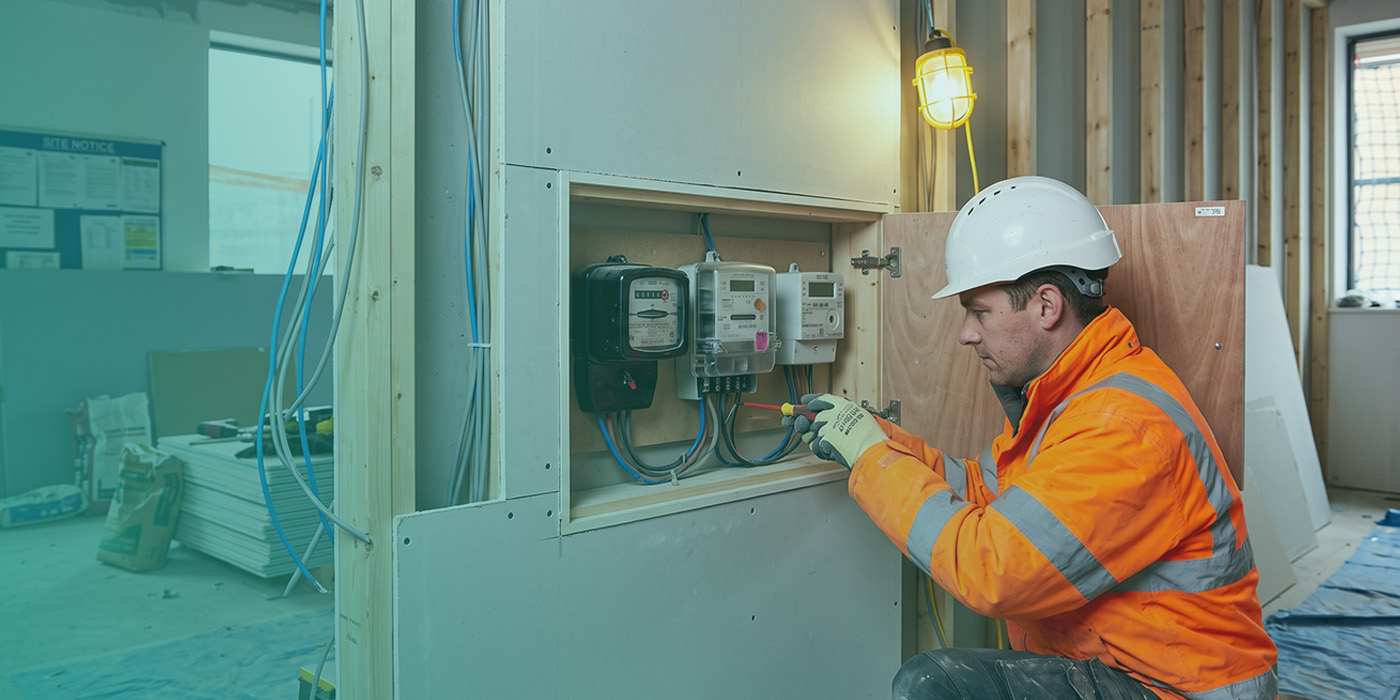
The typical sequence is unremarkable, which is exactly why it slips through. Contractors alter the metering layout to suit the new configuration. In doing so, they remove an official settlement meter and replace it with a private sub-meter, because to the eye one meter looks much like another. They have not set out to break anything. They simply do not realise that the meter they removed was the supplier’s billing point and the one they fitted is not.
At that moment the supplier’s billing arrangement is broken, but nothing visible has changed. The lights still work. The unit still draws power. The new sub-meter is recording consumption. Everyone moves on to the next task. The problem is now sitting on the supplier’s system, not on site, and it will not announce itself until the invoices arrive.
| The quiet break
A settlement meter removed and replaced with a private sub-meter looks identical on the wall. The supplier still expects to bill the MPAN it has on record. With no valid read, it estimates. The charges are legally valid and almost always wrong. |

The consequences land on someone’s desk eventually: a stack of estimated-read invoices, a tenant recharge claim and a fit-out completion certificate that was signed off before anyone noticed the wrong meter had been disconnected.
The consequences
Because the proper industry processes were not followed, the costs are both real and hard to challenge.
None of these costs are visible on the day the meter is moved. That is what makes them dangerous. By the time they appear on an invoice, the trail is cold.
The fix is upstream: a pre-works metering audit
The reliable way to avoid all of this is to map the metering before any works begin. A pre-works metering audit sets out exactly what is on site, which meter is the settlement meter against its MPAN, which are private sub-meters, and where any BNO arrangement sits. It states plainly what can and cannot be moved by contractors. Handed to the site team before they start, it removes the guesswork that causes the quiet break.
If a change to the settlement meter genuinely is needed, that is a managed process, not a contractor decision. The removal is arranged through the correct route with the supplier and meter operator, and the new arrangement is registered so the billing point stays valid. The point is not that meters can never move. It is that the settlement meter moves through the industry process, and everything else can be designed around it.
Designing a metering strategy that protects billing
A fit-out is also an opportunity. With the layout changing anyway, it is the right moment to design a metering strategy that protects the landlord’s billing, simplifies tenant recharging, and leaves a clean audit trail. That means deciding deliberately where settlement sits, how occupiers are sub-metered for recharging, and how the two reconcile, rather than inheriting whatever the contractor happened to leave on the wall.
Why it stays hidden until the invoice
What makes accidental meter removal so costly is the delay between cause and effect. The meter is moved during a fit-out that may last weeks, then the unit trades for a period before a full billing cycle completes. By the time an estimated invoice arrives that does not look right, months have passed. The contractor has demobilised, the site records reflect the new layout rather than the change that was made, and the person querying the bill was often not involved in the works at all.
Reconstructing what happened then becomes the hard part. Establishing which meter was the settlement meter, when it was removed and what replaced it can mean site visits, photographs and supplier records that nobody captured at the time. All of that effort goes into recovering information that a single pre-works audit would have recorded in an afternoon. The cost of getting it wrong is not only the erroneous charges. It is the work of proving they are wrong, and the time of the people who have to do it.

This is what proper meter identification looks like: every meter individually tagged before fit-out works begin, a Notice to Contractors posted at eye level, and a clipboard record kept alongside it, so that nobody on site has to guess which meter is which.
How Inteb helps
We conduct pre-works metering audits that map exactly what can and cannot be moved by contractors. If a change is genuinely needed, we manage the formal removal process through the supplier and meter operator, and we design a metering strategy that protects landlord billing, simplifies tenant recharging and leaves a clean audit trail. The work is upstream by design, so the problem never reaches an invoice.
Before the fit-out starts, ask three questions
→ Do we know which meter is the settlement meter, and its MPAN, before anyone touches the cupboard?
→ Have contractors been told in writing what they can and cannot move?
→ If the settlement meter has to change, is that going through the supplier and meter operator, or being done on site?
A fit-out should leave a unit ready to trade and a billing arrangement that still reconciles. The two are not in tension. They just need the metering mapped before the works, not reconstructed after the invoices.
FAQ
Can a contractor remove a settlement meter during a fit-out?
Not safely. The settlement meter is the supplier’s registered billing point, tied to the MPAN. Removing it without going through the supplier and meter operator breaks the billing arrangement and leads to estimated charges. Any change to it should be a managed process.
What is the difference between a settlement meter and a sub-meter?
A settlement meter is the registered meter the supplier bills against through the national settlement process. A private sub-meter is installed internally to apportion energy or support recharging, and it does not satisfy the supplier’s billing requirements on its own.
Why is the landlord billed on estimates after a meter is moved?
If the settlement meter is removed and a sub-meter is fitted in its place, the supplier has no valid read for the MPAN, so it bills on estimated historical usage. Those charges are legally valid even though they are usually wrong.

View

View

View

View

View

View

