




 Share
Share
Sustainable energy procurement strategies 2026 are no longer a side conversation in commercial property and corporate energy management. For most organisations, sustainability is now a board-level priority, tied directly to corporate reputation, regulatory exposure, investor scrutiny, and long-term operating cost.
At the same time, the commercial realities of energy procurement have become more complex. Non-commodity charges are rising. Network constraints are increasing. Contract risk has shifted. And energy decisions made today will shape cost and carbon exposure well into the next decade.
Between 2026 and 2030, organisations will be under growing pressure to deliver genuine carbon reductions without undermining financial performance. The challenge is not choosing cost or carbon. It is building procurement strategies that deliver both.
This is where many organisations struggle.

Modern city office building in a financial district representing organisations implementing sustainable energy procurement strategies 2026 across commercial property portfolios.
The False Choice Between Cost and Carbon
A common misconception still exists across commercial property portfolios and large energy users. Sustainability is often viewed as an added cost. Something that sits alongside procurement rather than within it.
In reality, poor sustainability decisions frequently increase long-term cost, while well-designed sustainable procurement strategies often reduce exposure to rising system and policy charges.
The issue is not ambition. It is execution.
Too many organisations adopt sustainability solutions without fully understanding how they perform commercially over time. Others focus exclusively on price and leave carbon strategy to sit elsewhere, creating fragmented decision-making.
Between 2026 and 2030, this approach will become increasingly risky.
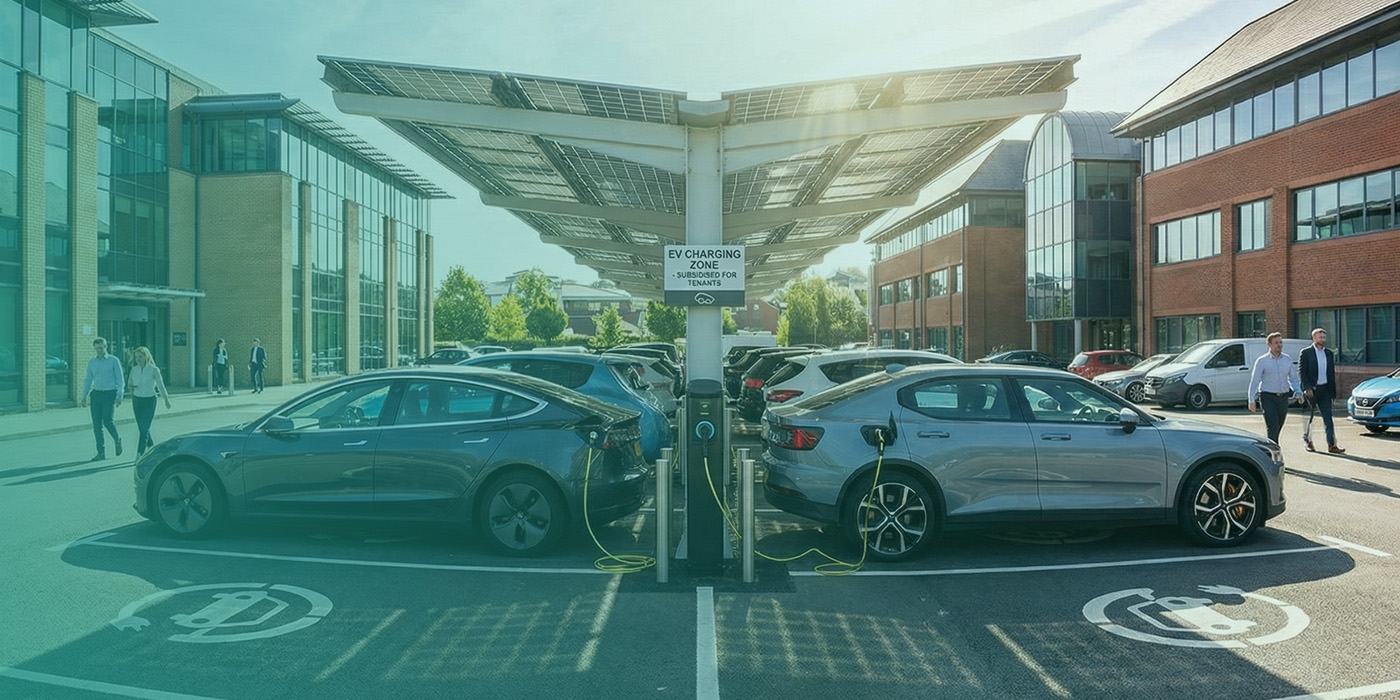
Electric vehicles charging under solar canopies at a modern office campus, illustrating sustainable energy procurement strategies 2026 in action.
Why Sustainable Procurement Looks Different After 2026
Several structural shifts are reshaping the energy landscape.
First, non-commodity charges now account for the majority of electricity cost for many large users. Network charges, levies, balancing costs, and policy driven uplifts are rising faster than wholesale prices.
Second, regulatory scrutiny around carbon claims is increasing. Sustainability progress is being challenged, under suspicion of greenwashing. Reporting frameworks are tightening. Organisations are expected to demonstrate genuine impact, not just intent.
Third, electrification is accelerating. Heat pumps, electric vehicles, and process electrification are increasing peak demand and changing load profiles, putting extra strain on the national grid.
These factors mean that sustainable procurement can no longer be treated as a branding exercise or a bolt-on to price driven buying.
It must be modelled, measured, and managed with the same discipline as cost.
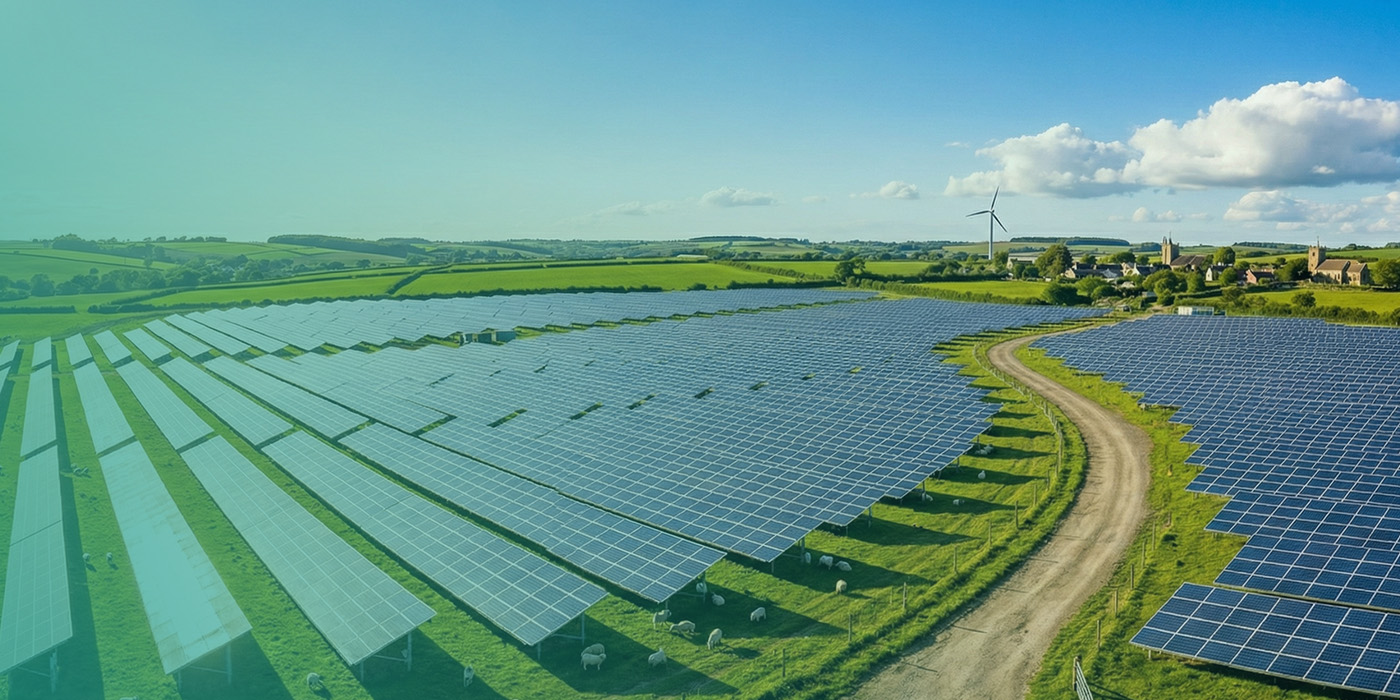
Large solar farm and wind turbine in rural landscape representing renewable generation within sustainable energy procurement strategies 2026.
Power Purchase Agreements: Opportunity and Risk
Power Purchase Agreements remain one of the most discussed tools in sustainable procurement.
When structured correctly, PPAs can offer long-term price visibility, support additional renewable generation, and reduce exposure to volatile wholesale markets.
However, PPAs are not risk free.
Between 2026 and 2030, the most common issues we see with PPAs include:
Mismatch between generation profile and consumption
Underperformance risk not fully modelled
Imbalance exposure pushed back onto the customer
Overreliance on a single asset or technology
A solar PPA that generates most of its output at midday may deliver limited benefit to a portfolio with peak demand in the evening. Without proper modelling, this can increase balancing costs rather than reduce them.
This is why PPAs must be assessed against both cost and carbon outcomes. Not just headline renewable credentials.
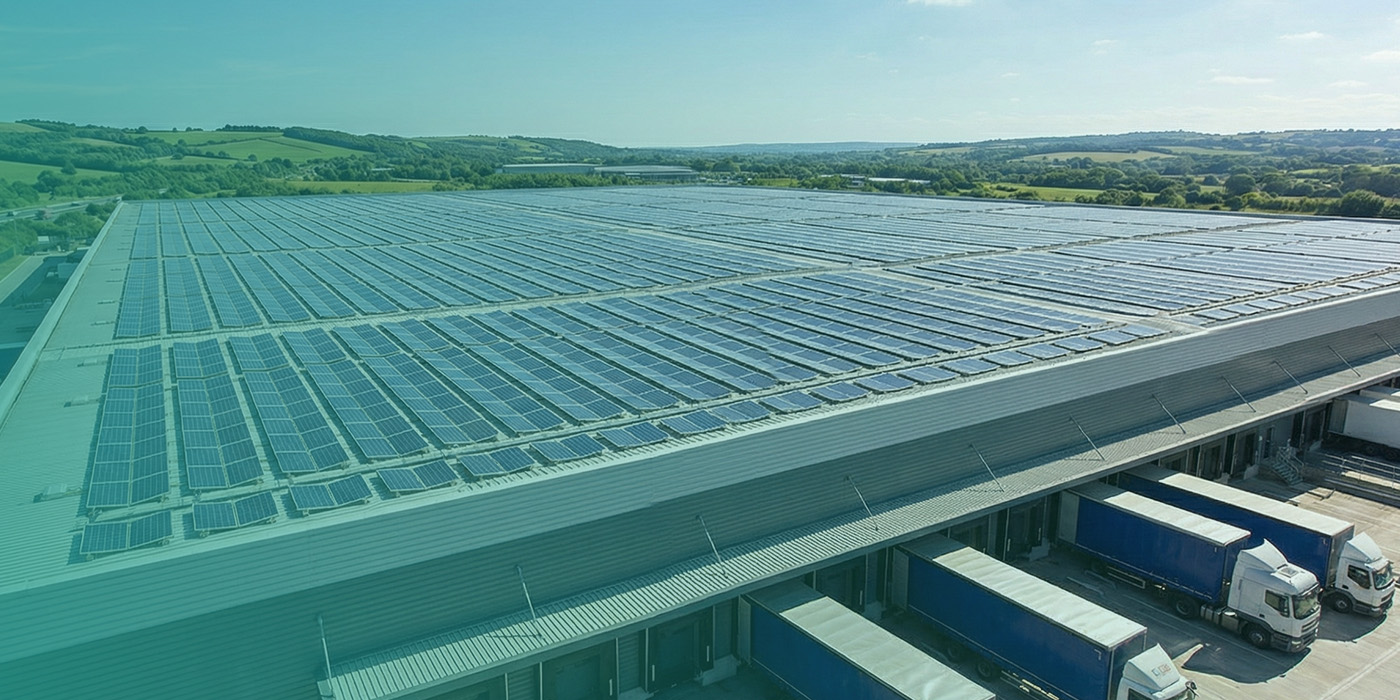
Large warehouse roof covered in solar panels demonstrating on site generation within sustainable energy procurement strategies 2026.
On-Site Generation and the Hidden Value of Self-Consumption
On-site generation has taken on new relevance as non-commodity costs rise.
Generating energy behind the meter can reduce exposure to network charges, levies, and system costs that apply to imported electricity. This makes self-consumption increasingly valuable between 2026 and 2030.
However, on-site generation only delivers its full value when it is aligned with site behaviour.
Key considerations include:
Matching generation to demand patterns
Avoiding export where possible
Integrating with storage or load shifting
Ensuring metering and data accuracy
For commercial property portfolios, on-site generation can also support service charge stability by reducing volatility in imported energy costs.
The mistake many organisations make is viewing on-site generation as a carbon solution only. In reality, it is increasingly a cost control tool.
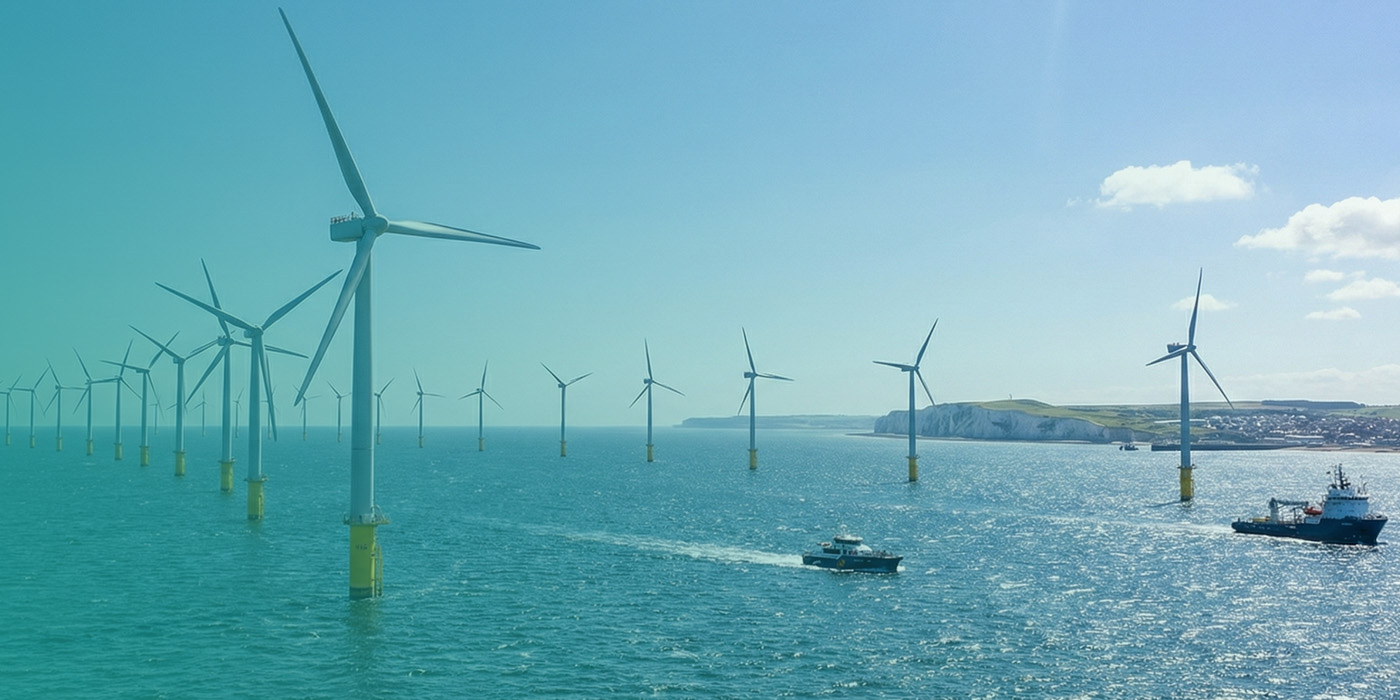
Offshore wind farm with multiple turbines at sea representing large scale renewable assets within sustainable energy procurement strategies 2026.
Renewable Underperformance Risk Is Rising
One of the least discussed aspects of sustainable procurement is underperformance risk.
Renewable assets do not always perform as forecast. Weather variability, curtailment, grid constraints, and asset degradation all affect output.
Between 2026 and 2030, underperformance risk will matter more as organisations rely more heavily on renewables to meet carbon targets.
If renewable output falls short, organisations may be forced to purchase additional energy at market rates, often at short notice. This can undermine both cost forecasts and carbon reporting.
This is why contracts must clearly define:
Performance thresholds
Remedial mechanisms
Cost allocation for shortfalls
Reporting and verification processes
Sustainable procurement without contractual protection simply transfers risk rather than managing it.

Modern office interior with energy dashboard displaying renewable usage data, supporting sustainable energy procurement strategies 2026.
The Pitfalls of REGO-Only Solutions
REGO backed tariffs remain popular because they are simple and low cost.
However, they are increasingly scrutinised.
REGOs do not guarantee additional renewable generation. They do not protect against rising non-commodity costs. And they offer limited credibility as a long-term sustainability strategy.
Between 2026 and 2030, organisations relying solely on REGO backed supply may face:
Increased scrutiny from stakeholders
Challenges around carbon credibility
Limited protection from system cost escalation
This does not mean REGOs have no role. It means they should be part of a broader strategy rather than the strategy itself.

Boardroom presentation on time matched renewable products as part of sustainable energy procurement strategies 2026 planning.
Time-Matched Products: The Next Evolution Beyond REGO
The conversation does not stop at REGOs.
The way large organisations report electricity emissions is changing. Proposed reforms to the Greenhouse Gas Protocol Scope 2 guidance signal a clear shift towards more granular, time-matched reporting of market-based emissions.
Draft proposals indicate that from around 2027 to 2028, larger energy users exceeding a defined annual consumption threshold, expected to be around 5 GWh per year, may be expected to move beyond annual matching and report emissions using time-based matching methodologies.
In practical terms, this means:
The direction of travel is clear. Renewable procurement is moving away from annual accounting and towards matching when electricity is generated with when it is actually consumed.
This is often referred to as time-matched, granular, or 24/7 renewable procurement.
Why This Matters Commercially
Time-matched products are not simply a reporting adjustment. They change how renewable contracts are structured and how value is assessed.
Under annual REGO matching, an organisation can consume electricity at 6pm when grid carbon intensity is high, yet claim renewable coverage because certificates were purchased from generation that occurred at midday.
Under time-matched models, that disconnect becomes visible.
This introduces both opportunity and complexity:
For larger commercial property portfolios and energy-intensive users, this shift will require procurement, sustainability, and operational teams to work far more closely together.
Preparing for the Transition
Although final thresholds and implementation timelines are still being confirmed, the reform horizon is close enough that reactive decisions would be risky.
For clients likely to exceed future thresholds, preparation now means:
The goal is not to rush into complex structures prematurely. It is to ensure renewable procurement remains credible, compliant, and commercially viable as standards tighten.
Future-Proofing Carbon Strategy
Between 2026 and 2030, renewable energy contracts will need to evolve.
Annual certificate matching will increasingly be viewed as a baseline, not best practice. Organisations that plan early can align procurement with operational flexibility, demand management, and evolving reporting expectations.
Those that do not risk finding themselves locked into contracts that satisfy yesterday’s reporting standards but fall short of tomorrow’s scrutiny.
Time-matched procurement is not about appearing greener. It is about ensuring that carbon claims withstand regulatory, investor, and stakeholder challenge.

Two professionals analysing cost and carbon data on a computer screen as part of sustainable energy procurement strategies 2026 planning.
Why Total Cost-Plus Carbon Modelling Matters
The most successful organisations no longer assess procurement decisions in isolation.
They model total cost and carbon together.
This approach considers:
Wholesale price exposure
Non-commodity charges
Network and capacity risk
Carbon intensity and reporting impact
Operational behaviour and demand patterns
By modelling these factors together, organisations can make informed trade-offs rather than reactive decisions.
For example, a slightly higher unit rate may deliver lower total cost once network exposure is considered. A renewable option with higher headline cost may reduce long-term risk by stabilising non-commodity exposure.
This is the level of analysis required between 2026 and 2030.

Team reviewing multi site energy performance dashboard to refine sustainable energy procurement strategies 2026 across a portfolio.
Multi-Site Portfolios Face Unique Challenges
Commercial property portfolios face additional complexity.
Energy decisions affect landlords, managing agents, and occupiers. Service charge recovery, transparency, and fairness all matter.
Poorly designed sustainability strategies can create disputes rather than value.
The most effective portfolios:
Centralise data and governance
Align procurement and sustainability teams
Communicate clearly with occupiers
Model impact at site and portfolio level
This avoids situations where carbon initiatives increase cost without clear benefit or where savings are achieved at the expense of credibility.

Learn more about sustainable energy procurement strategies 2026 and smarter low carbon decision making.
Inteb’s Approach to Smarter Sustainable Procurement
At Inteb, we support clients by bridging the gap between ambition and delivery.
We help organisations:
Assess sustainable procurement options objectively
Model cost and carbon together
Understand contractual risk
Align procurement with operational reality
Deliver measurable outcomes rather than promises
Our role is not to sell a specific solution. It is to ensure the chosen strategy works financially, operationally, and reputationally over time.
Between 2026 and 2030, this advisory approach will become essential.
Looking Ahead to 2030
The next five years will redefine energy procurement.
Carbon targets will tighten. Reporting will become more rigorous. System costs will continue to rise. And stakeholders will expect evidence, not statements.
Organisations that succeed will not choose between cost and carbon.
They will design procurement strategies that recognise the link between the two.
Those that do not will face higher costs, greater scrutiny, and limited flexibility.
Final Thought
Sustainable procurement is no longer about appearing green. It is about making decisions that stand up to financial, regulatory, and operational scrutiny.
Between 2026 and 2030, the smartest strategies will be those that understand total cost and carbon together.
That is where resilience comes from.

View
View

View

View

View

View

