




 Share
Share
When organisations look to reduce energy costs, the instinct is often to look for something tangible and visible. A new lighting scheme. A boiler replacement. Solar panels on the roof. These projects feel decisive. They signal action and progress.
And to be clear, many of these investments are worthwhile. Over the long term, they can play a key role in decarbonisation and asset improvement.
But they are rarely the fastest route to meaningful savings.
Across commercial buildings, public estates, and multi site portfolios, the quickest and cheapest energy reductions usually come from something far less complex.
Accurate measurement.
Clear communication.
Small, practical changes.
When those elements are in place, a 10 percent reduction in energy consumption is not an aspiration. It is a repeatable outcome.
We have seen this consistently across offices, retail estates, logistics facilities, manufacturing sites, and public sector buildings. Not through theory or modelling, but through day to day operational delivery.

Even well-run buildings can reduce energy bills through energy monitoring and smarter operational control.
Why Energy Waste Persists in Well-Run Buildings
Many buildings that overspend on energy are not poorly managed. In fact, they are often well maintained and professionally operated.
The issue is not neglect. It is invisibility.
Energy waste tends to sit in the background. It does not shout for attention in the way a broken lift or a failed boiler does. Out of hours operation becomes normalised. Baseloads creep up slowly. Control settings drift. Manual overrides stay in place long after the original reason has passed.
When no one can clearly see the impact, waste persists without challenge.
This is why measurement is so powerful. The moment energy use is made visible in a clear, understandable way, behaviour starts to change.

Collaborative analysis helps organisations reduce energy bills through energy monitoring and clearer visibility of energy patterns.
The Visibility Effect in Practice
Accurate energy measurement creates what is often called the visibility effect.
Suddenly, questions start to be asked.
Why is electricity consumption flat overnight when the building is empty?
Why did gas use spike over the weekend?
Why did energy use rise after a minor refurbishment?
These are not questions driven by policy. They are driven by curiosity and accountability.
Facilities teams notice patterns they were not aware of before. Operations teams spot issues that were previously hidden. Small inefficiencies that felt unavoidable become obvious and addressable.
This alone typically delivers savings of 2 to 4 percent. No new equipment. No capital spend. Just awareness supported by reliable data.
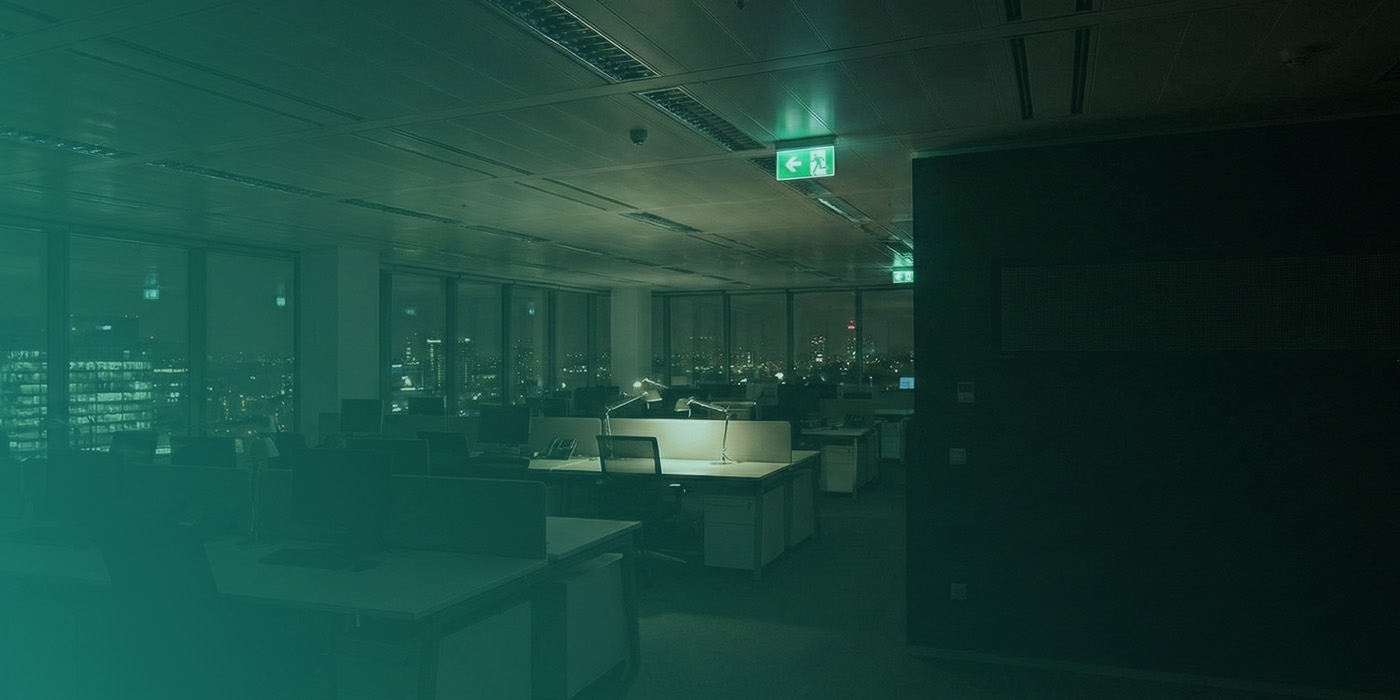
Unoccupied offices reveal why businesses struggle to reduce energy bills through energy monitoring without clear targets and visibility.
Why Vague Targets Rarely Deliver Change
One of the most common mistakes organisations make is setting broad energy reduction goals without defining how they will be achieved.
Targets such as “reduce energy by 10 percent” sound positive, but they do not tell anyone what to do differently on Monday morning.
In contrast, small, specific targets focus attention.
Reducing night time electricity by a few percent requires looking at schedules and shutdown procedures. Cutting HVAC runtime by an hour a day prompts a review of start and stop times. Reducing weekend gas use encourages teams to question whether systems need to run at all.
These are not transformational changes. They are operational tweaks. But because they are specific and achievable, they tend to stick.
Over time, small improvements accumulate. What starts as a modest adjustment becomes the new normal. This stage typically contributes a further 3 to 5 percent reduction in consumption.

Clear communication shows how businesses reduce energy bills through energy monitoring by acting on timely, shared insights.
Why Communication Makes the Difference
Data on its own does not change behaviour. Communication does.
Energy information needs to reach the people who can act on it, in a format they understand and at a frequency that keeps it relevant.
Weekly or monthly feedback works well because it is timely without being overwhelming. Short observations are often more effective than long reports.
Simple messages such as:
These insights prompt action because they are relatable and practical.
When teams see the immediate link between what happened and what can be changed, response times improve dramatically. This ongoing feedback loop often delivers an additional 3 to 6 percent reduction.
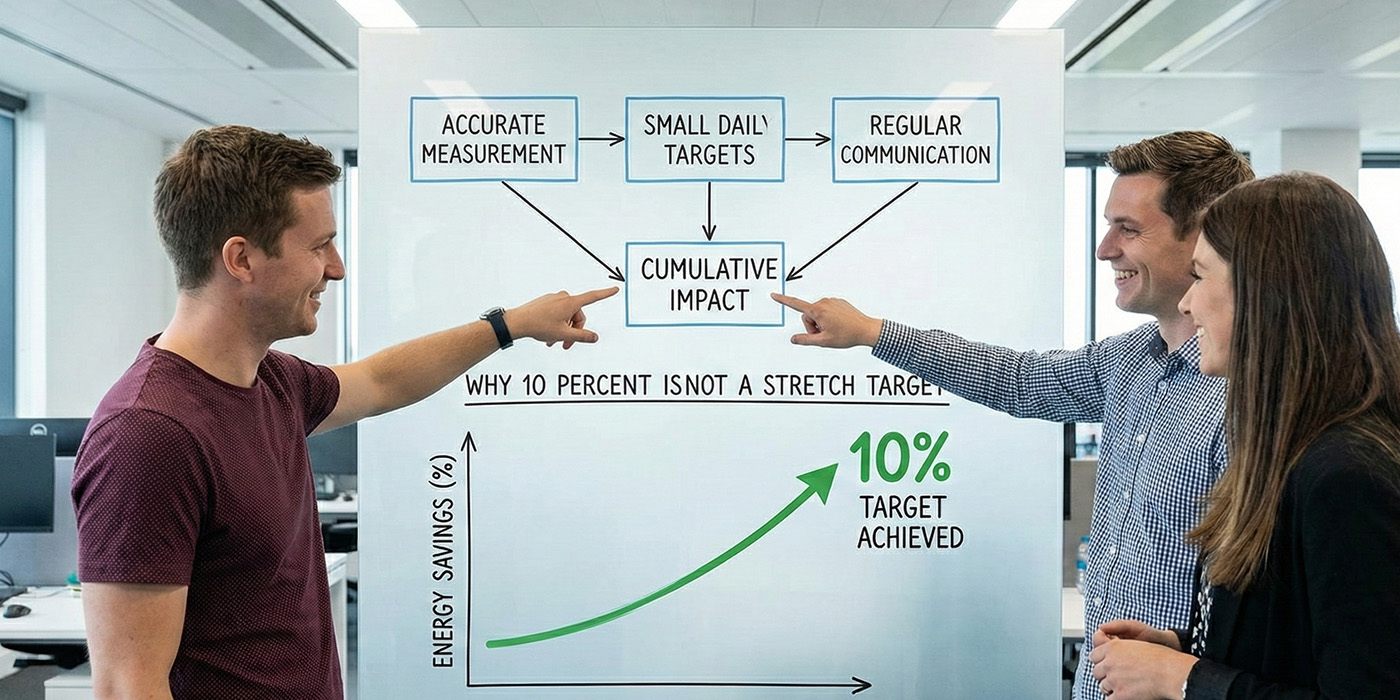
Clear measurement and daily targets show how teams reduce energy bills through energy monitoring and achieve a 10% saving.
Why 10 Percent Is Not a Stretch Target
When accurate measurement, small targets, and regular communication are combined, the impact is cumulative.
The result is not one big change, but many small ones working together.
This is why a 10 percent reduction is so often achievable without capital investment. In many cases, savings of 10 to 15 percent are delivered simply by operating buildings more intentionally.
For organisations under cost pressure, this represents one of the highest return interventions available.
Translating Percentages Into Financial Impact
Percentages can feel abstract. The financial reality is far more compelling.
In a typical medium sized office consuming around 1,000,000 kWh of electricity and 500,000 kWh of gas each year, a 10 percent reduction delivers savings in the region of £29,000 to £35,000 annually at current commercial energy prices.
These savings repeat year after year. They are not one off. And because they are driven by operational change rather than asset replacement, the payback is immediate.
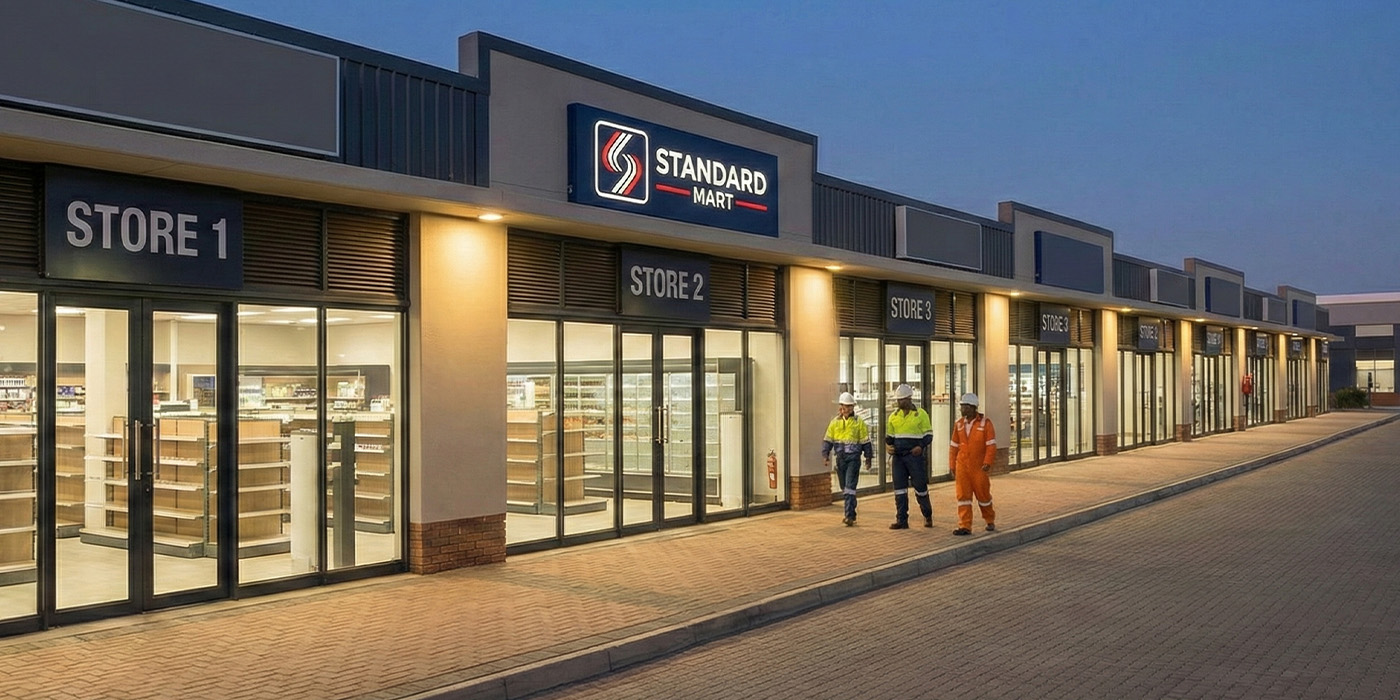
Larger multi-site users can reduce energy bills through energy monitoring by identifying patterns and inefficiencies at scale.
Why Larger Users See Even Bigger Benefits
As consumption increases, the value of reduction scales rapidly.
Manufacturing sites with continuous loads can save hundreds of thousands of pounds annually through relatively small efficiency gains. Retail estates benefit from standardised approaches applied across multiple stores. Warehouses see strong returns from better control of heating, lighting, and charging infrastructure. Public sector buildings often unlock large savings by addressing legacy controls and extended operating hours.
Across all of these environments, the pattern is the same. Better measurement leads to better decisions. Better decisions reduce consumption. Reduced consumption delivers financial resilience.
Reducing Risk as Well as Cost
An often overlooked benefit of reducing consumption is reduced exposure to future cost increases.
Lower energy use means less exposure to rising non-commodity charges, capacity costs, and network fees. It also reduces the impact of future regulatory changes and levies.
In an environment where energy pricing remains uncertain, buying less energy is one of the most reliable ways to manage risk.
Making Energy Reduction Part of Normal Operations
Perhaps the most important point is that these savings do not require heroic effort.
They do not rely on individuals working harder or taking on additional responsibilities. They come from embedding energy awareness into normal operations.
When teams are informed, empowered, and supported with clear data, energy reduction becomes part of how the building is run. It stops being a project and becomes a habit.

Got questions about how to reduce energy bills through energy monitoring? Better insight starts with the right conversation.
The Bottom Line
You do not need to wait for the next capital programme to start reducing energy costs.
For many buildings, the biggest and fastest savings come from measuring energy accurately, setting small practical targets, monitoring performance, and communicating clearly.
Do this consistently, and a 10 percent reduction is not a stretch. It is achievable, repeatable, and financially meaningful.
Buying less energy remains the cheapest saving available.

View

View

View

View

View

View

