




 Share
Share
28 Jul 2026
Market-wide Half Hourly Settlement is the largest change to the GB electricity retail market since privatisation. Ofgem is behind it and Elexon is running it. By May 2027, every electricity meter in the country has to be settled on a half hourly basis, and from July 2027 the settlement timetable collapses from fourteen months to four.
Most of the managing agents I speak to have not heard of it. That is not a criticism. It has almost no public profile, and nobody is going to fine you.
That last part is the problem.
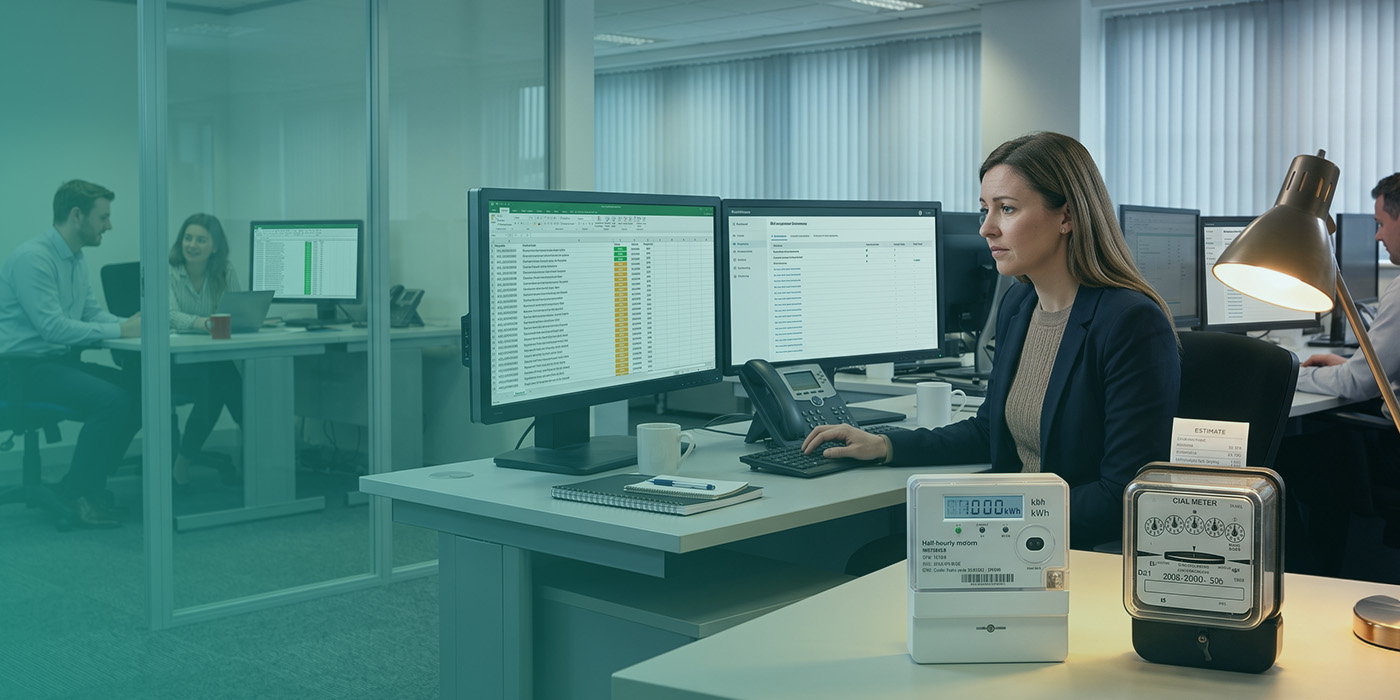
Two meters on the desk: one half-hourly capable, one still running on dials and estimates. Migration means the first exists somewhere on the system. Upgrade means the second has been replaced. They are not the same thing.
Migration is not the same as an upgrade
This is the point that catches people out, and I want to be precise about it, because a good deal of what is written about MHHS is misleading.
Your meters will be migrated. Your supplier does it for you, in a wave it has already agreed with the programme. You do not have to lift a finger. Meter replacement is not a general requirement of MHHS.
But the programme is designed to cope with old meters. Keep a traditional meter and you will be migrated into half hourly settlement and then settled on an estimate of what your half hourly consumption probably was, generated from periodic reads and an assumed profile.
You end up with the paperwork of half hourly settlement and none of the data.
That distinction is the whole article. The migration happens to you. The upgrade does not.
One genuine exception is worth knowing. Current transformer meters that are currently settled non half hourly are being required to move across, and that can mean a physical meter exchange. A lot of commercial property is CT metered, so for some estates this part is not optional.
What an estimated portfolio actually costs you
The consequence is not regulatory. It is commercial, and it surfaces somewhere nobody thinks to look.
When we take a client portfolio to market we do not tender each supply separately. A managing agent might have three hundred supplies sitting across dozens of funds, so we put them into a single group tender. Suppliers then run a set of checks before deciding whether to bid at all.
They look at consumption, because a portfolio full of voids and low users is not worth their time. They look at risk, which means credit ratings and registrations and the rest of it. And there is now a third check, which is new, and which almost no landlord knows about. They look at the state of your meter estate.
A portfolio that is eighty to ninety per cent half hourly attracts more bidders than one sitting at thirty per cent. That is not a fairness question, it is arithmetic. Under half hourly settlement a supplier is settled against actual consumption, so where your data is estimated, the gap between what they bought and what you used becomes their exposure. They will either price that in or decline to quote.
Fewer bidders is a worse rate. Sometimes it is no bid at all.
Nobody sends you a penalty notice for this. You simply get limited options from the market at tender stage, and nothing ever traces it back to the meter.
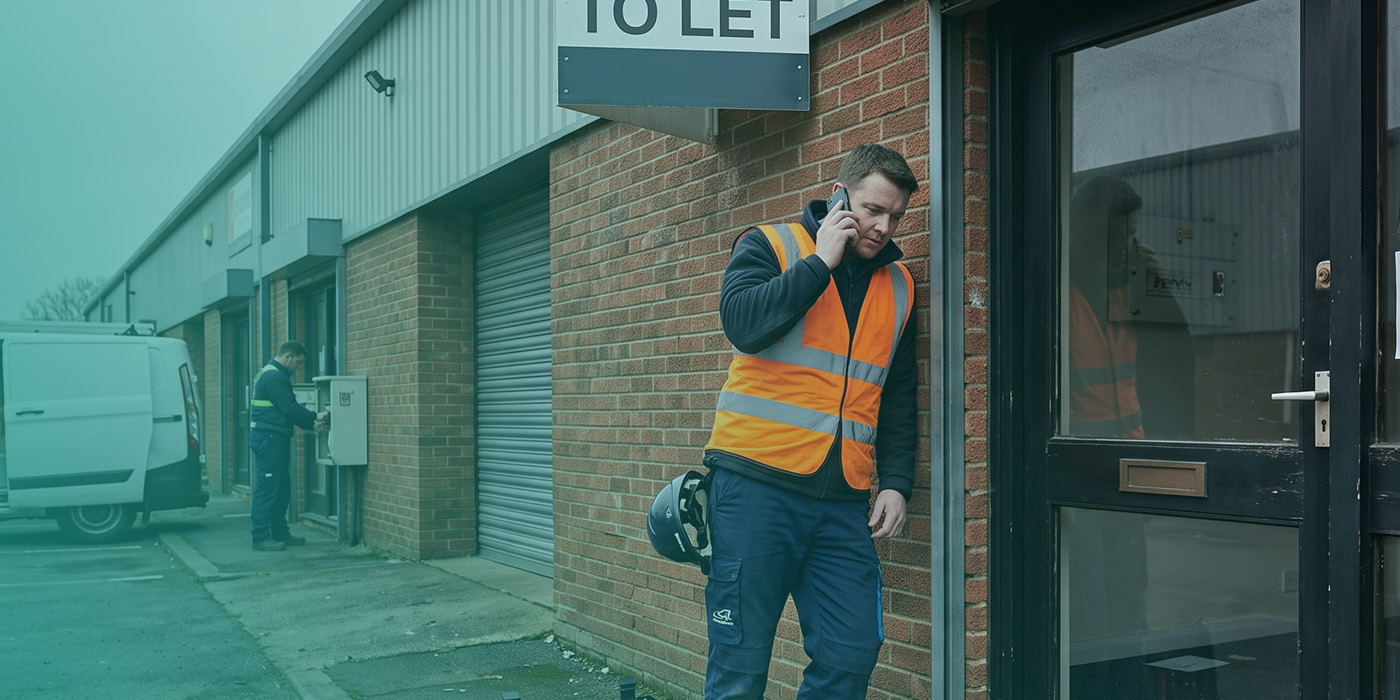
A vacant unit, a meter that needs upgrading before the next tenant arrives, and an operative on the phone finding out how long the supplier’s schedule will take. The deadline that matters here is not the landlord’s. It is the supplier’s.
The deadline that matters is your supplier’s, not yours
Migration runs supplier by supplier, in waves. Suppliers had to qualify with the programme by October 2026 or Ofgem stops them taking on new customers, so all of them are moving.
Which means the date this lands on your buildings is set by whoever supplies you, and most landlords have no idea what it is. That is worth asking this week, because the answer tells you how much runway you have.
This is a people problem, not a metering problem
The technical work is a meter swap. Half an hour, sometimes less.
Everything difficult about it is human.
The supplier does not do the exchange itself. It subcontracts to a meter operator, whose engineer then has to get into the building. In a vacant unit the power is off and there is nobody there to let them in. In a multi-occupied building every occupier has to be told that their power will be off for around half an hour on a specific day, and they have to agree to it.
And here is the detail I would put on a poster. The engineers ring the site contact and email them, and they get ignored, because people assume it is a scam. So nobody answers and the appointment quietly dies. It gets rebooked, and you go to the back of a queue that is getting longer every month.
What works is somebody owning it end to end. Book the slot with the meter operator. Confirm it with the building. Go back two days beforehand and check that the engineer is still coming and that the occupiers still know. Then check the day afterwards that the exchange actually happened and the data is flowing.
None of that is technical. It is a phone call made twice by someone the site already trusts. But it is the difference between a meter that gets changed and a meter that does not.
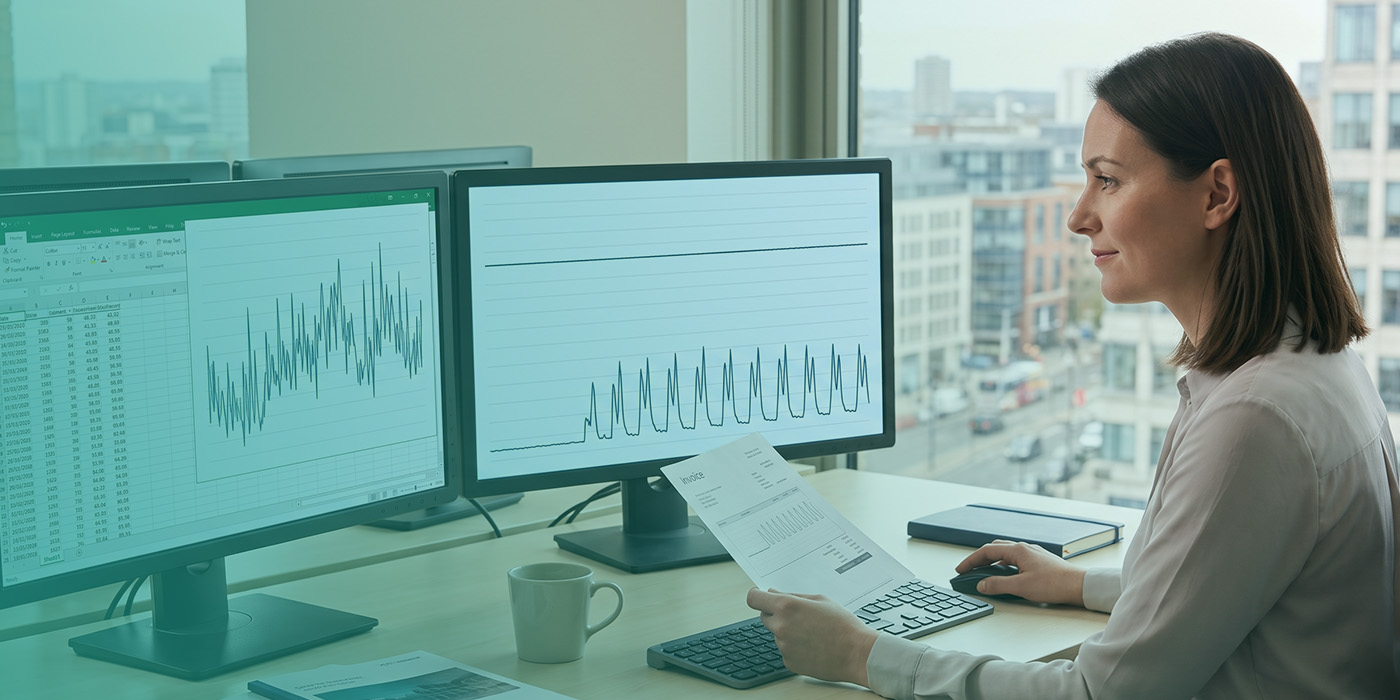
This is what you get at the end of a completed MHHS meter upgrade: actual half-hourly data, a consumption profile that reflects what the site genuinely does, and an invoice that can finally be validated against it.
What you get at the end of it
Actual half hourly data is worth considerably more than the tender advantage.
Bill validation stops being an educated guess. As part of bill validation, my team checks that the billed rates on an invoice match the rates our procurement team negotiated. With half hourly data we also have accurate consumption to validate against, instead of the estimated figure that otherwise means checking one guess against another.
Tenant changeovers get easier too. You stop needing a site visit for a final read, because the curve tells you. A vacant unit flatlines. The moment somebody moves in you see the spikes, and then a pattern.
And this is where it joins up with everything my colleagues do. Validated, actual consumption data is the same data set that your SECR disclosure and your ESOS assessment both run on. If your energy data is estimated, your carbon reporting is built on estimates too, and no amount of careful work at the far end repairs that. It is why the first webinar we ever ran was on invoice validation. It is not a billing exercise. It is where the whole thing starts.
Two questions
Ask which MHHS wave your supplier is in. Then ask what percentage of your estate is half hourly today.
If you cannot answer either, that is the finding.
FAQ
What is Market-wide Half Hourly Settlement (MHHS)?
MHHS is an Ofgem led programme, implemented by Elexon, that moves every electricity meter in Great Britain onto half hourly settlement. It is the largest change to the electricity retail market since privatisation. Migration began in October 2025 and runs to May 2027, with the new settlement model taking effect in July 2027 and the settlement timetable shortening from fourteen months to four.
Do I have to upgrade my meter for MHHS?
Not necessarily, and this is the most common misunderstanding. Your meter point will be migrated into half hourly settlement by your supplier regardless of what meter you have, and meter replacement is not a general requirement of the programme. However, if you keep a traditional meter your consumption will be settled on an estimate of half hourly usage rather than on actual readings. There is one exception: current transformer meters currently settled non half hourly are required to move to half hourly settlement, and that can involve a physical meter exchange.
What is the MHHS deadline?
Ofgem’s deadline for migration is May 2027, by which point all meter points must be settled half hourly. The new settlement model takes effect in July 2027. Suppliers migrate their own customers in waves that they agree with the programme, so the date that affects your buildings depends on which supplier you are with.
Are there penalties for not upgrading to a half hourly meter?
No. There is no fine for an end customer who keeps a traditional meter, and any claim otherwise should be treated with caution. The cost is commercial rather than regulatory. Suppliers assessing a portfolio at tender look at the proportion of supplies that are half hourly, because estimated data carries settlement risk they have to price or avoid. An estate with a low proportion of half hourly meters attracts fewer bids, which usually means a worse rate.
Will there be a power cut when my meter is changed?
Briefly, yes. A meter exchange typically takes around half an hour, during which the supply to that meter is off. In a multi-occupied building this has to be agreed with every affected occupier in advance. In a vacant unit, somebody has to be present to give the engineer access, which is often the harder problem.
Why does my meter estate affect an energy tender?
Under half hourly settlement, suppliers are settled against actual consumption. Where consumption is estimated, the difference between what the supplier bought and what was actually used becomes the supplier’s exposure. A portfolio with a high proportion of estimated supplies carries more risk, so suppliers either price that risk in or decline to bid. In a group tender that shows up directly as fewer offers on the table.
Does half hourly data help with ESOS and SECR reporting?
Yes, and this is the part most landlords miss. Actual half hourly consumption data is the same data set that underpins a SECR disclosure and an ESOS assessment. If your billing data is estimated, your carbon reporting is built on estimates too. Fixing the meter fixes everything downstream of it.

View

View

View

View

View

View

