




 Share
Share
07 Sep 2026
When a building comes back with a worse rating than expected, the instinct is to reach for the capital plan. Replace the plant. Do the lighting. Look at the roof.
Sometimes that is exactly right. Often it is premature, because the first question has been skipped.
What is actually driving this rating?
A commercial EPC is a calculation, not a measurement. It models the building’s fabric, its installed services and any on-site generation, using standard assumptions about how the building is occupied and run. It does not measure what the building actually uses.
That single distinction explains most of the confusion, and most of the wasted money.
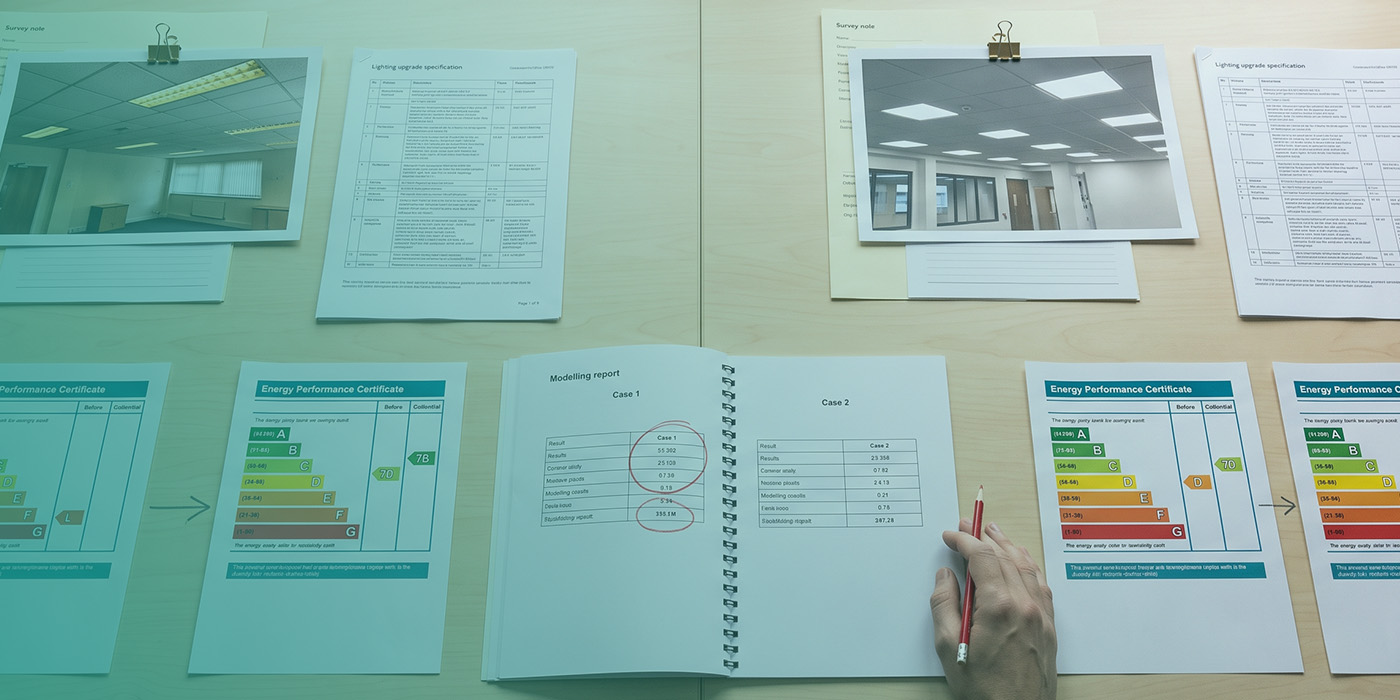
Two buildings, the same lighting upgrade, two different outcomes. Where a score sits within its band decides how far a single measure moves the rating.
The scale of the gap between bands
It helps to know what the bands actually represent. On the non-domestic methodology, band E runs from 76 to 100, and band B runs from 26 to 50. The abandoned C milestone sat between them at 51 to 75.
So a D or E rated building being asked to reach B is not being asked for a small adjustment. It is being asked to roughly halve its assessed score. That is why the choice of measures matters so much, and why guessing at it is expensive.
It also explains something owners find counterintuitive. Offices are usually harder to move than warehouses or retail sheds, because they carry heavier regulated loads: comfort cooling, mechanical ventilation, lifts and dense lighting. All of that weighs in the calculation.
Why the same measure is worth more in one building than another
The calculation compares a building against a notional equivalent of the same size and shape built to a reference standard. The rating reflects how far the real building sits from that benchmark.
Which explains something that catches owners out. The value of any given improvement is not fixed. It depends entirely on the starting point.
Replace failing fluorescent lighting or an old atmospheric boiler and the improvement is substantial, because the baseline was poor. Upgrade adequate double glazing to triple, or add insulation to a roof that already has some, and the change is often close to nothing, because the calculation already treats that element as performing acceptably. The capital is spent either way. Only one version of it moves the rating.
This is why the same specification produces very different results across a portfolio, and why modelling a building before choosing measures is not an optional extra.
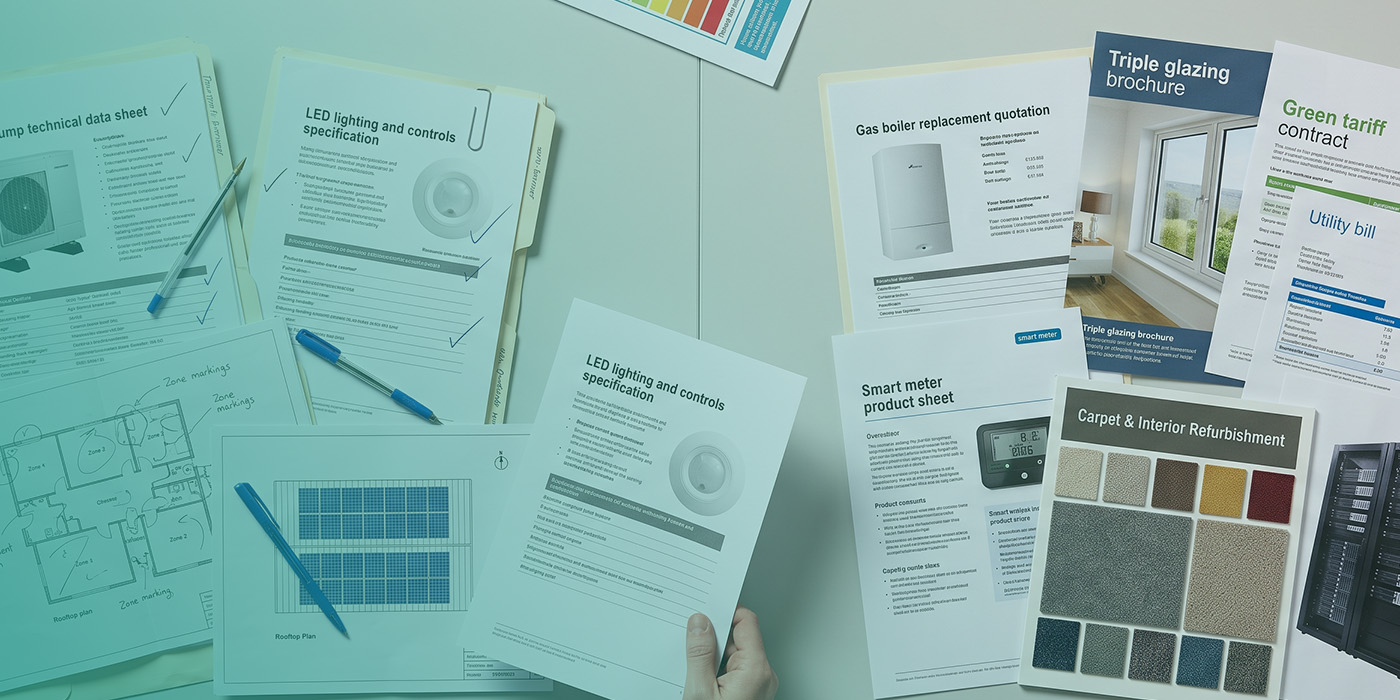
The short pile is what the calculation credits. The long pile is where the money usually goes.
What genuinely moves the rating
Five areas do most of the work, and the first is more important than the rest combined on a great many buildings.
The heating fuel. The non-domestic methodology is a carbon calculation, and it uses fuel carbon factors that have moved considerably. Grid electricity has decarbonised while gas has not, so gas heating now weighs heavily against a building in a way it did not a decade ago. On a gas-heated asset the heating carbon tends to dominate the result, which means electrification of heat is usually the route to a substantial improvement rather than one option among several.
Lighting with controls. Often the best return for the outlay, particularly where the existing installation is old. Efficient LED alongside presence detection and daylight controls improves the calculation and reduces real consumption, so the business case stands up on both grounds rather than one.
Controls and building management. A building can have decent plant and still perform poorly because of how that plant is scheduled and zoned. A properly integrated system is recognised in the calculation. Piecemeal controls added to an otherwise unchanged building tend to deliver less than owners expect.
On-site generation. Solar offsets regulated electricity within the model and works well on large flat-roofed buildings with electrical loads to offset. It is worth being clear about its limits though. On a gas-heated building, solar reduces the electricity carbon but leaves the heating carbon untouched, so it rarely moves such a building as far as owners hope.
Fabric. Roof insulation and cladding can make a real difference on larger, simpler buildings with poor existing fabric. On a building already reasonably insulated, the modelled benefit is usually small against the cost.
What does not move it, however much sense it seems to make
This is the part that surprises people, and it is worth being blunt about.
Actual energy consumption. A building using less energy than the one next door does not get a better certificate for it. The rating assesses the asset, not its bills.
How well the occupier runs the building. A conscientious tenant with tight operating hours improves the building’s real performance and changes the rating not at all. You cannot operate your way to a B. It has to be built into the asset.
Everything plugged into a socket. Computers, servers, kitchen equipment, printers. These are unregulated loads, excluded from the calculation entirely because they are driven by the occupier rather than the building. A server room can dominate a building’s actual electricity bill and contribute nothing to its EPC.
A green tariff. Buying renewable electricity may reduce an occupier’s reported emissions. It does not change the building being assessed.
Changing supplier, or installing a smart meter. Both are worth doing. Neither alters a single input into the calculation.
Cosmetic refurbishment. Carpets, decoration, partitioning and furniture have no bearing on the rating whatsoever.
A new gas boiler. This one costs people real money. Replacing an old gas boiler with an efficient new gas boiler improves the building and does very little to the rating, because the calculation is weighing the fuel rather than the appliance. A like-for-like replacement in 2026 can leave an owner having spent a substantial sum and moved almost nowhere.
Triple glazing, usually. The improvement over modern double glazing is marginal in the model and the cost is not. Where existing glazing is genuinely poor the picture changes, but as an upgrade from adequate to excellent it is one of the least efficient ways to buy a band.
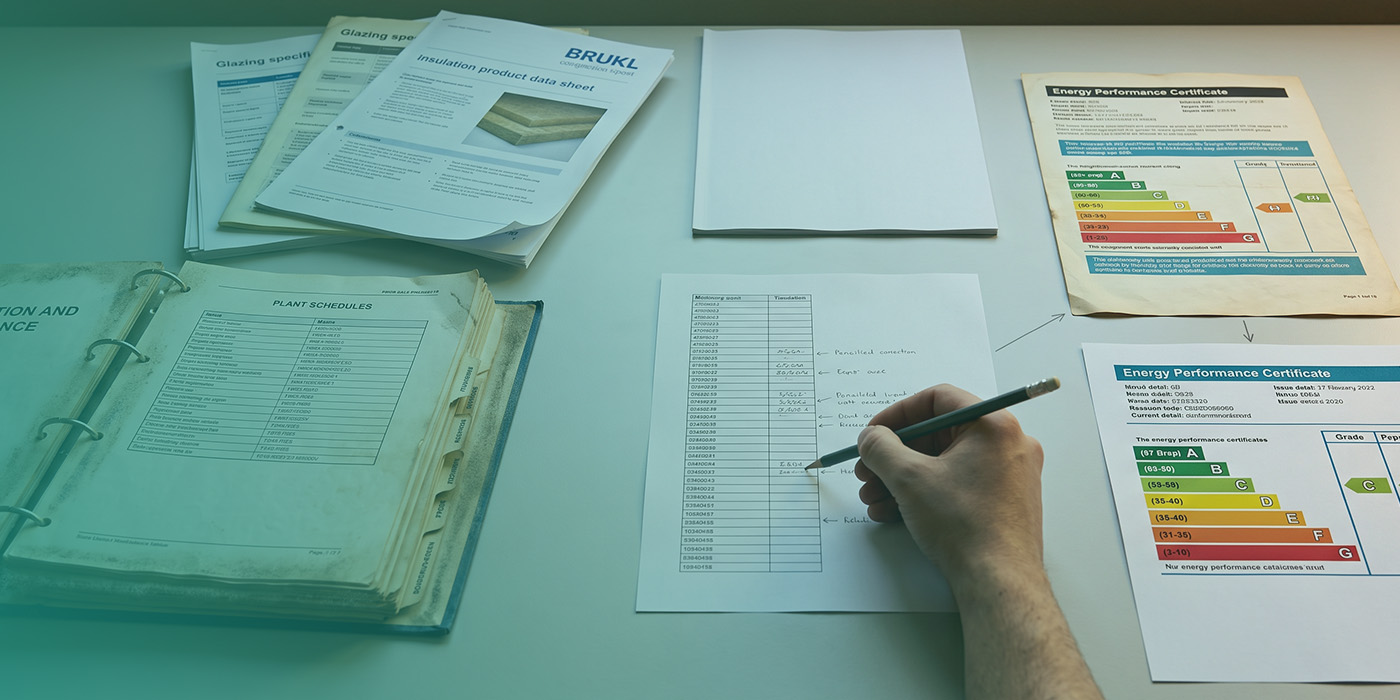
Nothing on this desk is a capital project. The rating moved because the defaults were replaced with what the building actually has.
The default trap
The most common reason a building is rated worse than it deserves has nothing to do with the building at all.
Where an assessor cannot see or evidence a component, the software requires a default value, and those defaults are deliberately conservative. Missing paperwork on insulation, glazing, plant specification or controls therefore produces a worse rating than the building has earned.
Providing that evidence and remodelling can move a rating without a single physical measure being installed. This is not gaming a certificate. It is making the assessment describe the building that exists rather than a cautious guess about it.
What helps: operation and maintenance manuals showing actual model numbers for plant and lighting, BRUKL compliance reports where the building has been constructed or altered recently, and specification sheets for insulation and glazing.
On one building that is a useful saving. Across a portfolio it can change the size of the capital programme entirely, which is why it belongs before the investment decision rather than after it.
The risk nobody plans for
A certificate issued under an earlier version of the methodology can come back worse on renewal even where nothing about the building has changed. Carbon factors and modelling assumptions move over time, and a rating that was comfortable when issued may not be when it is redone.
For anyone working towards a threshold, that matters. A building sitting just inside a band today is not necessarily sitting inside it when the certificate expires.
Knowing which certificates in a portfolio are old enough to carry that risk is a five minute exercise. Discovering it during a letting is considerably more expensive.
Do not aim at the band. Understand the route
The most common brief we receive is some version of getting this building from D to B.
That is a destination, not a route, and there are usually several routes with very different price tags.
Lighting, controls and evidence verification is one. Plant replacement with lighting is another. Plant, controls and fabric together is a third. A full refurbishment is a fourth. Each produces a different rating, a different cost, a different amount of disruption and a different effect on how the building actually runs.
Modelling them before committing is what separates a considered programme from an expensive one. It also identifies the two situations owners most need to know about: where a modest intervention delivers a worthwhile uplift, and where a large one delivers very little.
Improving a commercial EPC is not simply a question of spending money on energy efficiency.
Sometimes the answer is new plant. Sometimes it is better controls. Sometimes it is folding the work into a refurbishment that was happening anyway. And sometimes the most valuable improvement available is better information about a building that was always performing better than its certificate suggested.
The question to start with is not what should we install. It is what is actually holding this building back.
If you would like to know what is driving the ratings across your portfolio, we are happy to take a look.
FAQs
What improvements have the biggest effect on a commercial EPC rating?
Heating, ventilation and cooling plant usually contributes most, followed by lighting with presence and daylight controls, building management and controls improvements, on-site solar generation, and fabric measures such as roof insulation. The relative value depends on what is already installed, which is why modelling comes before specification.
Does reducing energy consumption improve an EPC rating?
Not by itself. A commercial EPC is an asset rating that models the building fabric, installed services and on-site generation using standard assumptions. It does not measure actual consumption, so operating a building efficiently does not change the certificate.
Are plug-in appliances included in a commercial EPC?
No. Small power and equipment loads such as computers, servers and kitchen appliances are unregulated loads and are excluded from the calculation, because they depend on the occupier rather than the building.
Can an EPC rating improve without physical works?
Sometimes. Where an assessment has relied on default assumptions because evidence of construction, plant or controls was unavailable, supplying that evidence and remodelling can produce a more accurate and often better rating.
Does a renewable energy tariff improve a commercial EPC?
No. A green tariff may reduce an occupier’s reported emissions but it does not change the physical characteristics of the building being assessed.
Does replacing a gas boiler improve a commercial EPC rating?
Not usually, if the replacement is another gas boiler. The non-domestic calculation weighs fuel carbon factors, and grid electricity has decarbonised while gas has not. On gas-heated buildings the heating carbon tends to dominate the rating, so electrification of heat generally produces a far larger improvement than a more efficient gas appliance.
Why does the value of an EPC improvement depend on what is already installed?
The calculation compares the building against a notional equivalent built to a reference standard. Improving an element that is already performing acceptably produces little change, while improving a poor one produces a large change. The same specification therefore delivers very different results across a portfolio.

View

View

View
View

View

View

